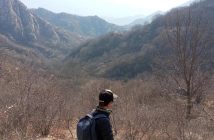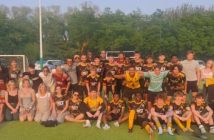

In the social impact world, a common question is “What’s bugging you?” Entrepreneurs often start with a problem that bothers them, whether it’s a social issue or a market gap. For Daystar Academy tenth-grader Bayan Changizi, the answer was quite literal: bees. A longtime fascination with these vital pollinators led this student innovator to learn beekeeping for a school project – but he didn’t stop there. Bayan went on to build his own apiary, integrating beekeeping into his Beijing-based FROOT initiative, which grows organic produce and promotes sustainable farming. So what drives this young changemaker, and what’s it really like to keep a hive buzzing? We sat down with him to find out.
 Bayan, your family has deep roots in Beijing. What’s your backstory?
My parents moved here more than 25 years ago from Canada. I was born in 2009 in Beijing. My mother is a math teacher at Daystar, and my father is a doctor at Beijing United Family Hospital. My older siblings are both studying in the medical field, one in Australia and one in the US.
So you’re a born-and-bred Beijinger! Are you fully fluent in Chinese? Is China “home” now?
Yes, I speak Chinese at the same level as English. In writing, my English is a bit better! I’ve attended the bilingual Daystar Academy since preschool. In primary, we studied a mix of the Chinese national curriculum and IB. My family spent every summer in Vancouver, and we have Persian ethnicity, so yeah, Canada and China are equally home, although mostly I identify as a global citizen.
You’re in the IB MYP (International Baccalaureate Middle Years Program), which is known for its interdisciplinary approach. What is the goal of student projects during MYP?
In the last year of MYP, as we prepare to enter the DP (International Baccalaureate Diploma Program, grades 11-12), we complete a Personal Project on social innovation. We identify a social or environmental issue and come up with a solution to take action. We start defining our project in Grade 9 and continue throughout Grade 10. We do independent research, have an assigned supervisor who mentors us, and submit our final project to IB by February.
You chose a rather unique topic for your project – beekeeping! Why?
During the pandemic, there was severe isolation. My family wanted to reconnect with nature, and together with a Chinese family, we bought a farm in a village east of Beijing. I began helping out there on weekends, and eventually, I set up a venture called FROOT together with three friends. FROOT sells organic produce that’s pesticide-free and humanely farmed and free-range eggs from our own incubated chickens. We also host monthly events on sustainable farming practices, like composting, for families.
 I’d love to buy humane produce from FROOT! So, where did bees enter the picture?
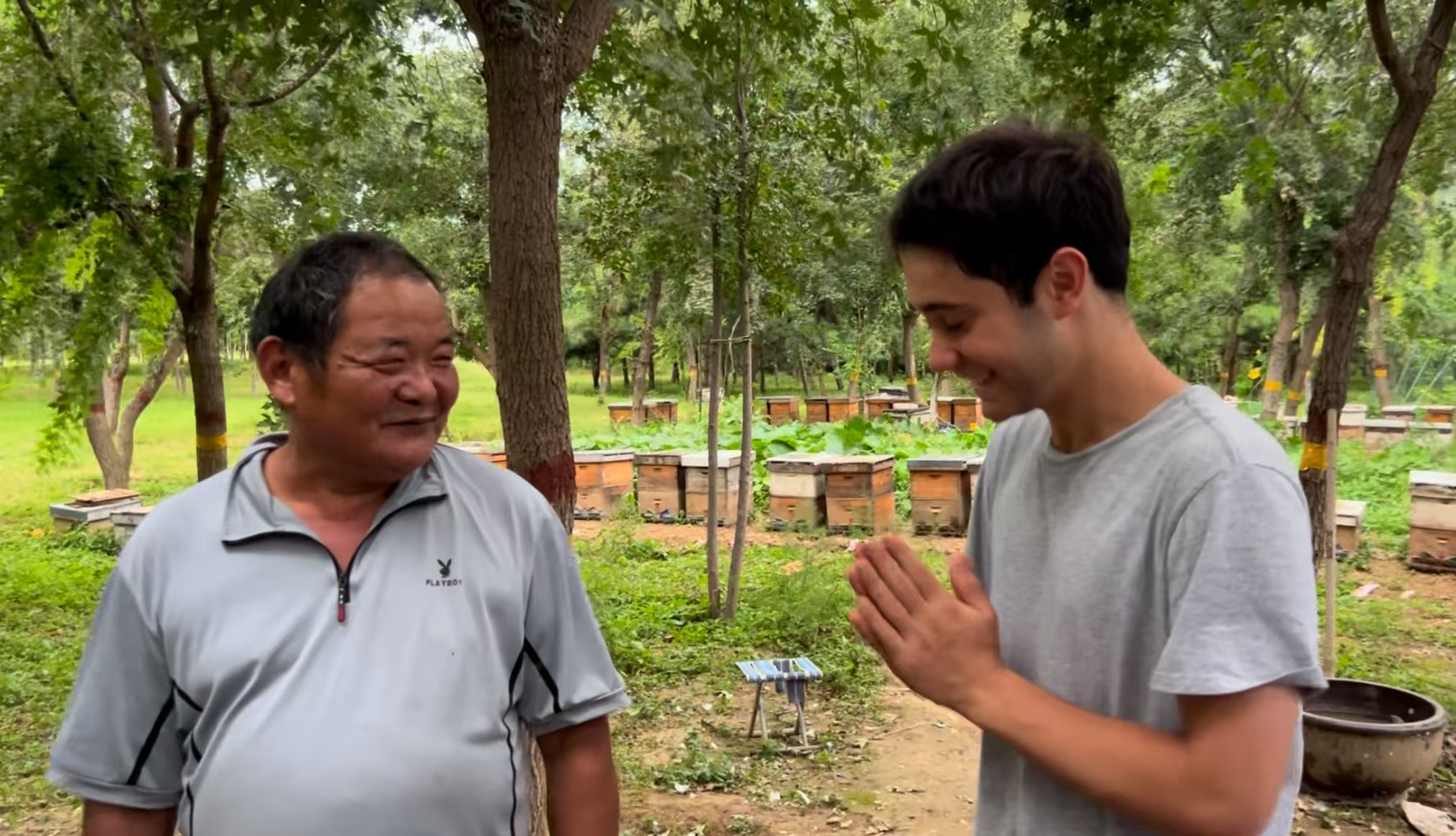
While working on the farm, I became more aware of the role of pollinators in sustainable farming. I’ve always been fascinated by bees – how they work together, how important bees are to human life as they pollinate up to 80 percent of all foods, and how their numbers are declining. Every summer in Vancouver, we’d see beekeepers on the road and stop to visit their apiaries. So, the MYP Personal Project was the perfect opportunity to take this interest to the next level. I reached out to a neighboring farmer, Mr Chen – we always bought his honey – and asked to do an apprenticeship. He taught me everything he knows! His experience helped me understand how to care for a hive and ensure its survival through the seasons. After a couple of months of learning, I moved the hive to our own farm and started beekeeping independently.
What kinds of bees do you keep?
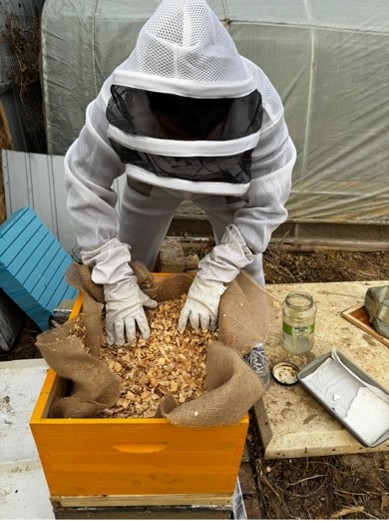
These are Italian honeybees. Native honeybees in Northern China are endangered; they are kept in protected areas where invasive European honeybees cannot threaten them.
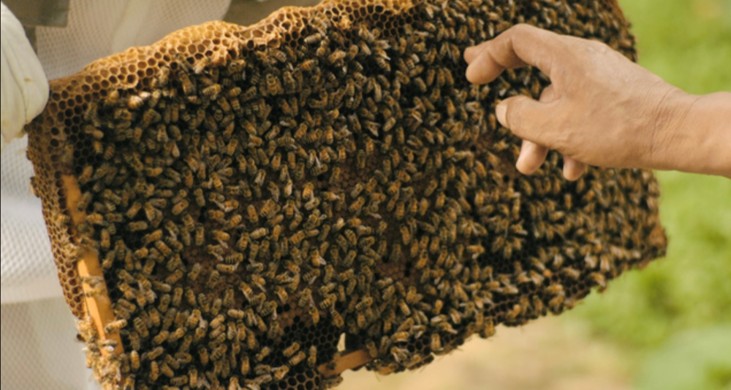 What does beekeeping entail exactly? When do you harvest?
I go every weekend to tend the hive. It’s a yearlong process. Winter is the toughest period for bees, with low temperatures and no source of nectar or pollen. During winter, I fed my bees sugar as supplementary food and insulated the hive to help them conserve energy. Now that it’s spring, I’m planting flowers near the hive to increase food diversity for their foraging. Throughout the year, beekeepers will inspect their hives for things such as mites, disease, population size, and queen health. The honey harvest comes in autumn.
How does it feel to handle the hive?
Intense! You need to keep all movements smooth so as not to agitate the hive.
Did you get a chance to exhibit your project results?
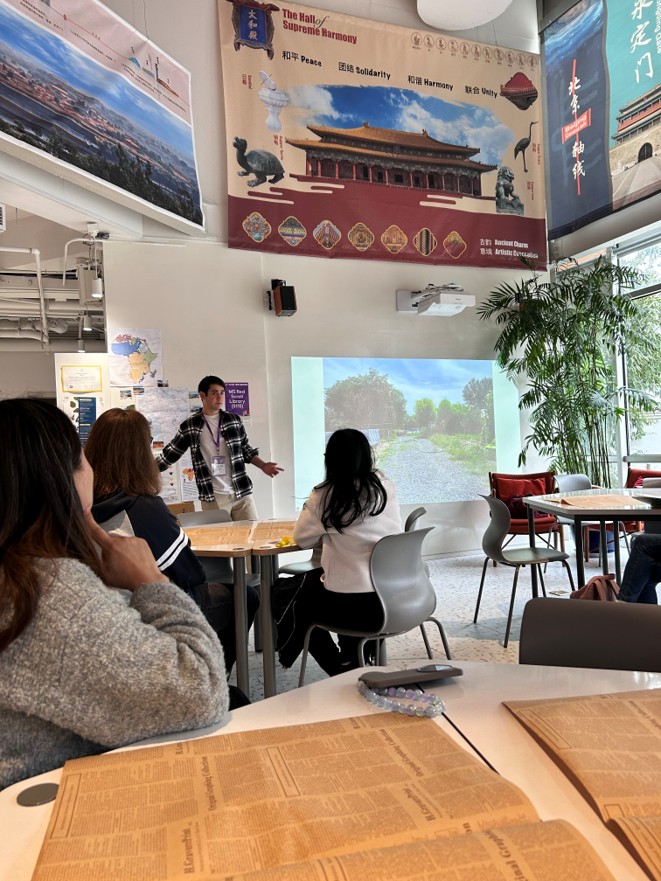
We had an exhibition at school, and I presented it at the Future of Education Now (FOEN) conference at Western Academy of Beijing (WAB) in March, at a workshop session called Planting the Seeds for a Sustainable Future.
 What aspects of your upbringing do you feel particularly shaped your drive?
My family environment is a big part of who I am. My parents always encouraged hands-on work, whether it was fixing broken appliances or getting your hands dirty in the garden. I remember my brother reminding me to “be the best Bayan I can be.”
 What three pieces of advice would you offer for other young people?
1: In a world increasingly immersed in technology, remember to maintain a connection with nature and the earth.
2: Once you find a passion, explore it and hang on to it.
3: Always find a way to give back what you have been given.
Looking ahead, do you see sustainable farming playing a role in your future studies or career?
Climate change is a problem that our generation will have to tackle. Sustainability isn’t just a choice – it’s a necessity. What I’ve learned from farming will shape how I see the world and the role I want to play in it.
Inspired? We know we are! If you’re a teen with an incredible achievement, let us know! Get in touch with Mina Yan via email at minayan@beijing-kids.com or WeChat (ID: Wilhelmina87).

Images: Bayan Changizi