In many international schools, inclusion has become a core value thoughtfully woven into classrooms, counseling offices, learning support programs and staff conversations. We invest time and energy into ensuring that every student can learn, thrive and participate fully in academic life. This work is essential, and it has transformed countless children’s school experiences for the better. Yet in our commitment to building inclusive school communities, we sometimes forget that children do not only belong to schools. They belong to families, neighborhoods, cultural groups, recreation spaces and the broader local community of Beijing. If we want true inclusion, our efforts must extend beyond the classroom walls and into the world our students live in every day.
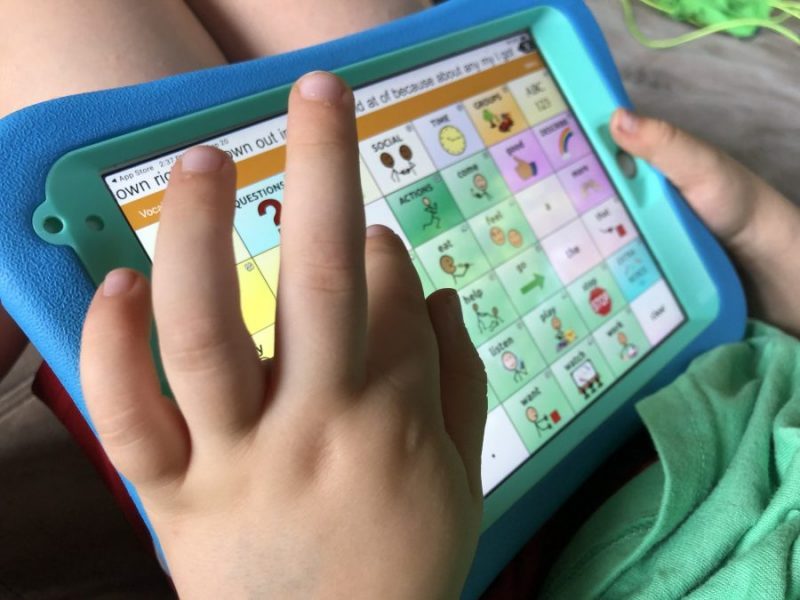
One of the most common challenges families of children with disabilities share is that school feels inclusive, but the rest of life does not. I recall a parent telling me that her son, who thrives in his school support program, is still met with confusion in the public park when he uses sign-language to say hello. Another family mentioned to me how their daughter is welcomed during school group work but feels ignored in her apartment courtyard because other children don’t quite know how to interact with someone who communicates with the help of an augmentative and alternative communication (AAC) device. These stories remind us that inclusion is not a policy. It is a skill set, a mindset and a community habit. When the environment changes, the responsibility to build bridges returns to all of us.
 Creating inclusive spaces is possible anywhere, and often it begins with the smallest gestures. In school, a teacher might pair students intentionally, so every child experiences meaningful collaboration. At home, a parent might model patience by explaining a sibling’s sensory needs and demonstrating how to be supportive. In a community park, a passerby might choose to smile warmly at a child having a difficult sensory moment rather than staring or stepping away. These everyday micro-moments of understanding and connection are as powerful as any formal program; they shift the culture toward belonging.
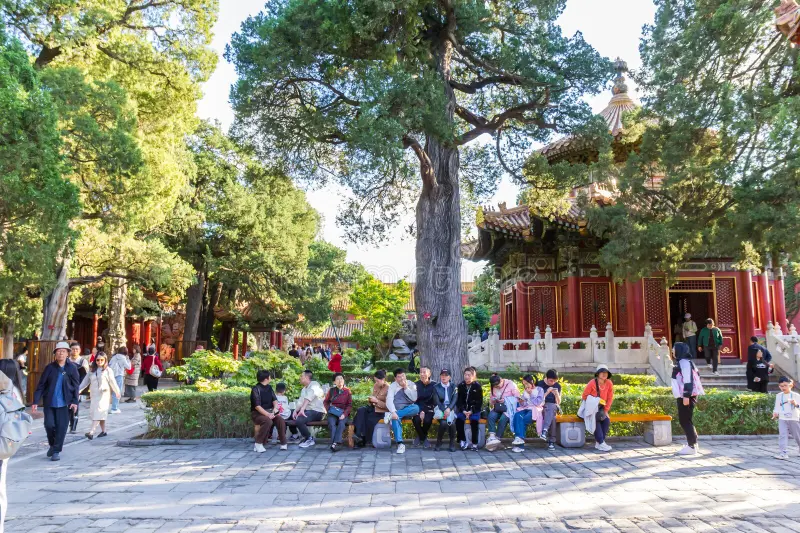 Inclusion beyond the classroom also means advocating for accessible public spaces, culturally responsive community programs and opportunities for individuals with diverse needs to participate in local life. Our city has made significant strides with metro signage improvements and sensory-friendly museum programs, and adaptive club and sport initiatives are growing. But community inclusion is not built by governments alone; it is strengthened by neighbors who choose empathy, peers who choose curiosity, and community members who choose patience rather than judgment.
As educators, parents, and community members, we share a responsibility to carry the principles of inclusion with us wherever we go. The classroom can teach empathy, but the city tests it. The school can model acceptance, but the community completes it. Inclusion is most powerful when it becomes a lived experience rather than a school-based concept.
So, on behalf of SENIA-Beijing, we would like to leave you with this question, which you are invited to sit with, reflect on and act upon: Who in your daily life, at school, at home or somewhere in our Beijing community, needs you to open a door, extend a hand or offer understanding today?
If you would like to join our community, all community members – educators, professionals and families are warmly invited to our upcoming SENIA-Beijing Fall 2025 Conference on Nov 28, 2025, 8.30am-4.30pm. Visit https://www.seniachapters.org/beijing/#conference for details and registration.

Images: SENIA