Whether you are a seasoned veteran expat or as fresh in the ‘Jing as this season’s mozzies, we can all agree that living in Beijing is a colorful, surprising, and exciting experience. No matter how much research you have done in advance, we have all encountered cultural differences that blew us away, and the differences between our child-rearing ways are no different.
If you plan on having babies, have babies, or even if you don’t, here are some of our favorite (and not-so-favorite) cultural occurrences when it comes to little ones to look out for during your time in Beijing!
Bummed OUT!
Quite literally, in fact. It is not uncommon to see babies or toddlers running around wearing split pants (开裆裤 kāidāngkù), which, if you haven’t seen them yet, are pants with an open crotch, more often than not without any diapers! So, yes, you have a little baby bum wiggling about in public. And while my first split-pants sighting made me do a double-take, the Chinese (especially grandparents) have quite logical reasons for this practice. Besides saving on the costs and waste of diapers, an air-dried bum prevents diaper rash, especially during the hot summer months, and they believe it encourages early potty training by getting the baby used to squatting and doing their business, not in a diaper. Consequently, this also means that it is completely normal for someone to hold their baby in a squatting position over a trash can, drain, or bush while they go potty.
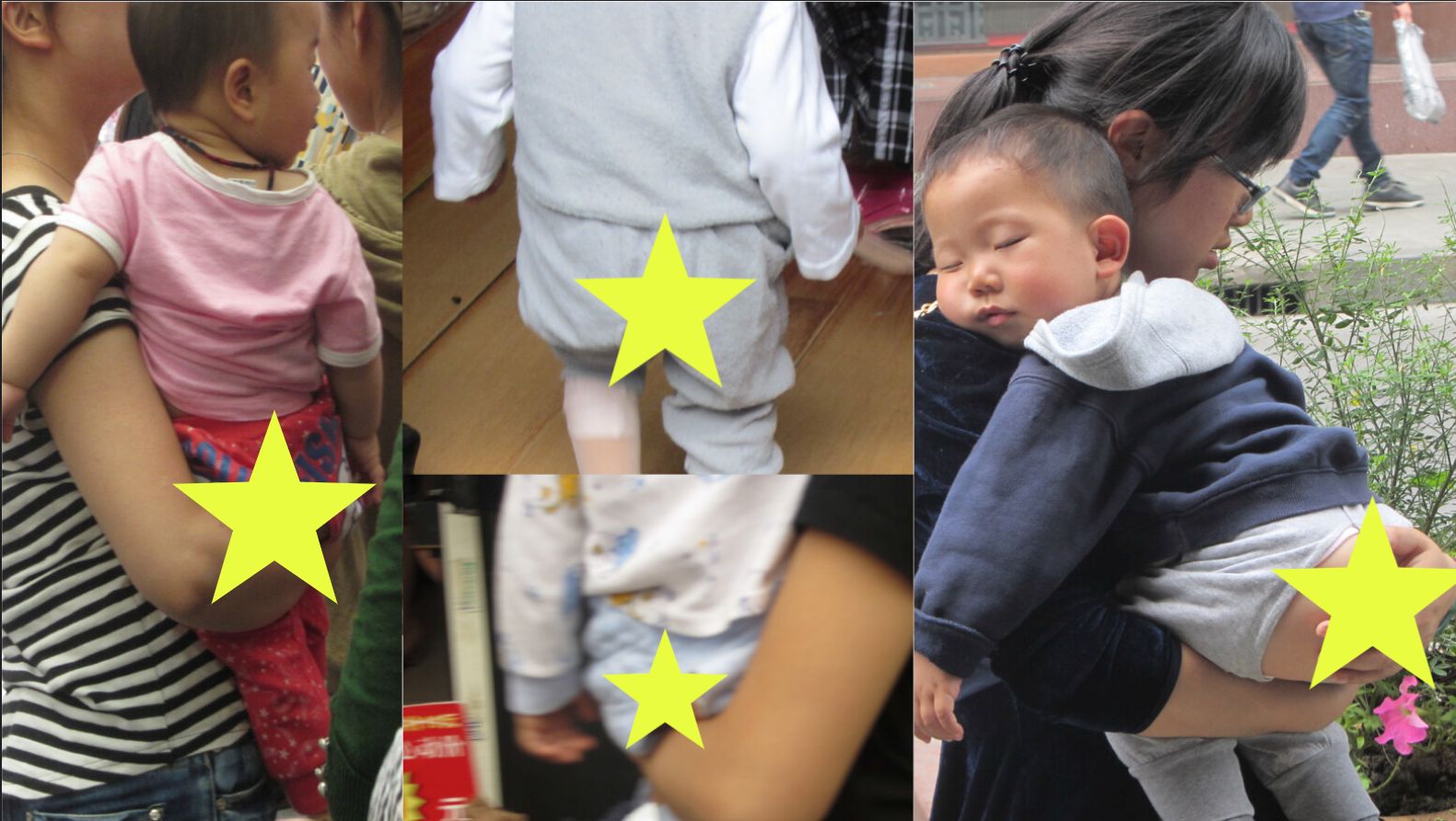 As this practice is so different from the culture of most expats in Beijing, people come across this and react in all kinds of ways. Some have called it unsanitary and unsafe; others applaud the frugality and sustainability. I have even experienced foreigners joining in on the bare-butt action with their own babies! What do you think? Yay or nay?
Locked In!
Giving birth is such a monumental moment that, of course, there are a multitude of practices around this milestone all over the globe. While the Huichol in Mexico have the woman tug on a rope tied to her partner’s testicles with every contraction, and some people dressed as devils jump over infants in Spain to absorb original sin and protect the babies from evil or sickness, in China they have the confinement month or 坐月子 (zuòyuèzi). This means that the new mom is not allowed to go outside, bathe or shower (although those things are less common now that there is AC and blow dryers), eat or interact with anything cold, and will often hire a confinement nurse (or yuesao) to help take care of her and the baby. For those who don’t want to hire a confinement nurse but still want to do a traditional confinement month, there are confinement centers 月子中心 (yuèzi zhōngxīn) that offer the same service, but you get your own private hotel-like suite where you can rest and a nurse is always on call to help take care of your newborn.
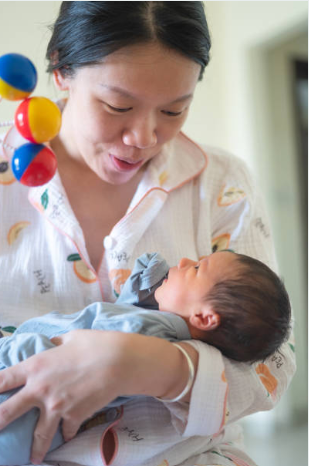
Expat moms often suffer at the hands of this practice, as Chinese locals will sometimes criticize, lecture, or even scold them when they do something considered a “no-no” during the confinement month. I have been hit on the shoulder before by an old lady for being outside with my baby within the first month, while other moms have been told by their ayis or Chinese in-laws to immediately cease their showering ways. Of course, eating an ice cream is completely out of the question! (Though that is a rule I will be breaking repeatedly after giving birth this summer, for sure!) While some of the customs might seem annoying or unnecessary, there are also perks! If you registered your birth at the local clinic in order to get the free vaccines and check-ups for your baby (available to absolutely any pregnant mom), then you will also benefit from two medical professionals – one for you and one for your baby – coming to your home for a check-up.
Since moms are expected to remain in pajamas and not do any physical activity during confinement month, you don’t even have to get dressed! They will come and see that everything is progressing normally, ask you a few questions (in our case via translator), and finally give you some tips and information about caring for a newborn – all for free!
Bundle Up!
No matter the weather, hot or cold, Chinese babies in Beijing are always in layers and layers of clothes and blankies…even in July. If I had RMB 1 for every time a Chinese person (of any age and gender) told me that my baby is cold and I need to put more clothes on her, I would probably be able to buy all the naughty ice creams I’ll need during my first month postpartum.
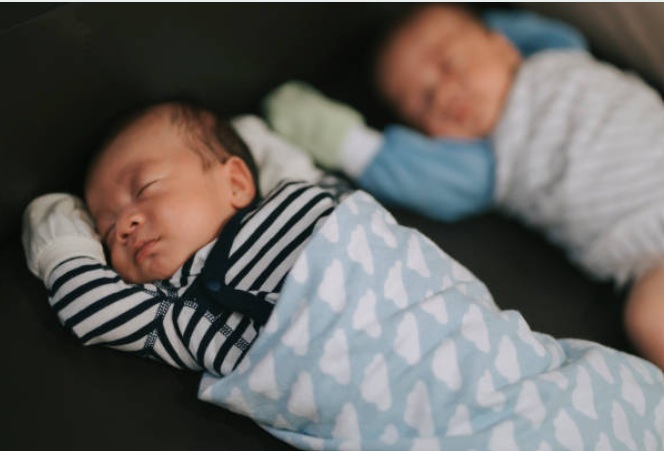 The biggest struggle for expat parents – particularly those with a Chinese partner or who have hired a yuesao or ayi – is the endless cycle of you taking extra layers off your baby, and them putting them back on again. Anyone who has lived in China long enough knows that cold is basically the enemy. From drinking hot water (to cure ANY issue short of death) to eating food as soon as it is cooked and still scalding, locals will do whatever they can to avoid the cold – even when we expats think there isn’t any cold to avoid.
100 Days Down!
While some of the cultural differences you’ll experience in Beijing are cute, some are beneficial, and others possibly frustrating, this next tradition is something I love about being here. In ancient times, when child mortality rates were quite high, reaching 100 days was cause for celebration. Despite it not being such a feat anymore, the tradition, like the babies, lives on! And who doesn’t like an excuse to have a party? The family will often shower the baby with gifts like baby items, gold jewelry, and hongbao (red envelopes).
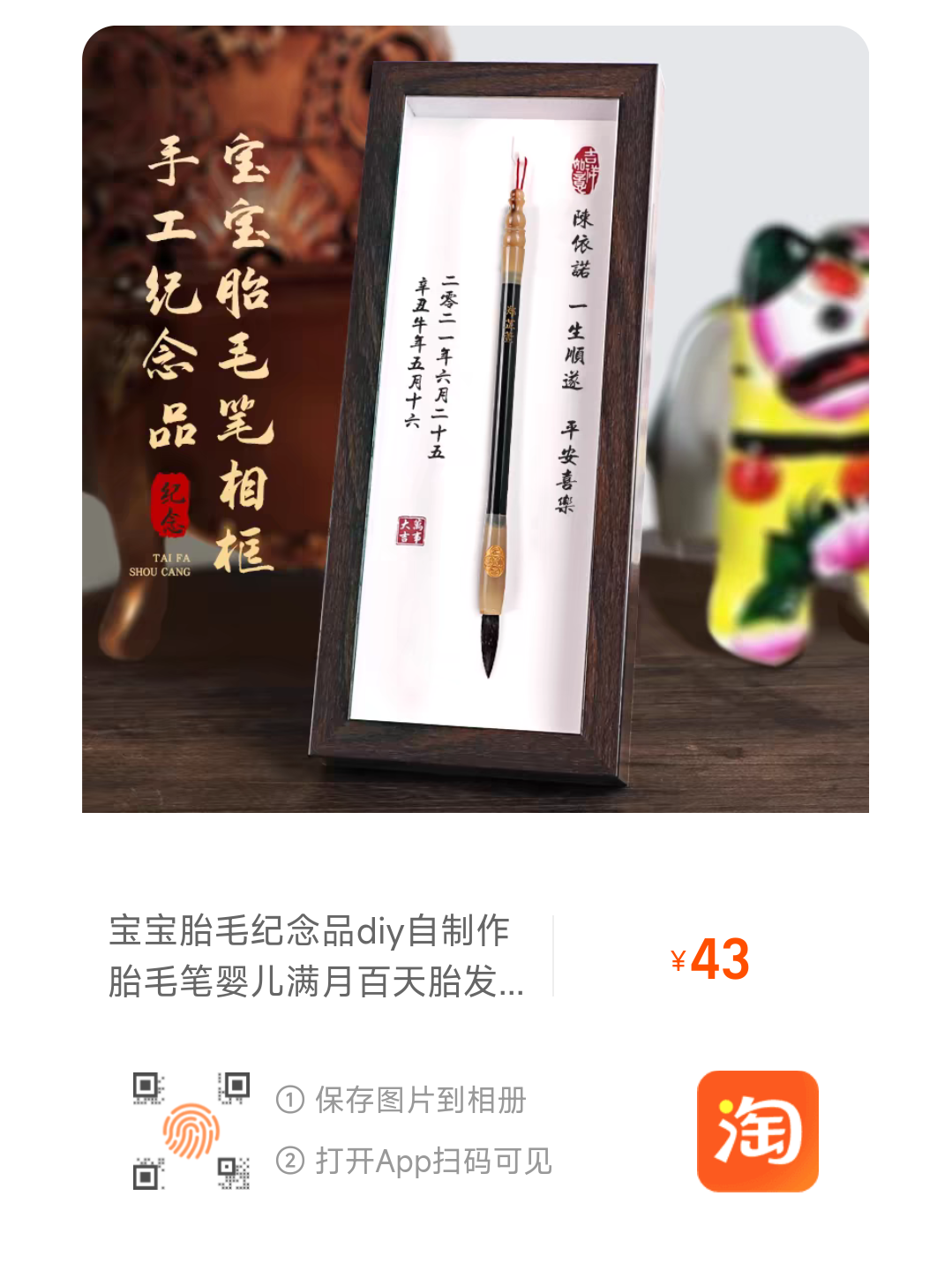
This is often also when they give the baby their first haircut – to encourage thicker hair regrowth. Included in this is a super sweet tradition of making a calligraphy brush with the cut hair. There are plenty of shops (also on Taobao) that will inexpensively make the brush for you and frame it with wishes of prosperity written in Chinese calligraphy, along with the baby’s name, which makes an adorable keepsake. In my culture, we also sometimes keep a lock of hair from the first haircut. Turning it into a framed calligraphy brush definitely makes it easier to keep and cherish.
First Birthday, Final Bearing!
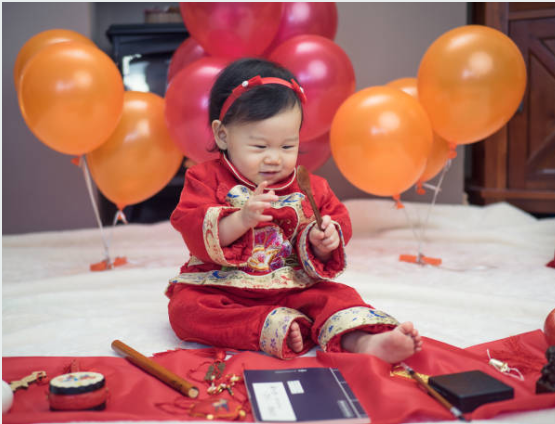
Another very cool tradition is what Chinese families do with their babies on their first birthdays: the item grab, or 抓周 (zhuāzhōu). The baby is placed on a mat surrounded by items that represent careers, and whichever item the baby grabs could then predict what their future career path or traits will be. The items and their represented careers could include:
📚 Pen = scholar
💰 Money = wealth
👨⚕️ Stethoscope = doctor
🧄 Garlic = savvy businessman
🎤 Microphone = performer
There are zhuazhou kits online that include a red cloth and the basic essentials for different career paths. 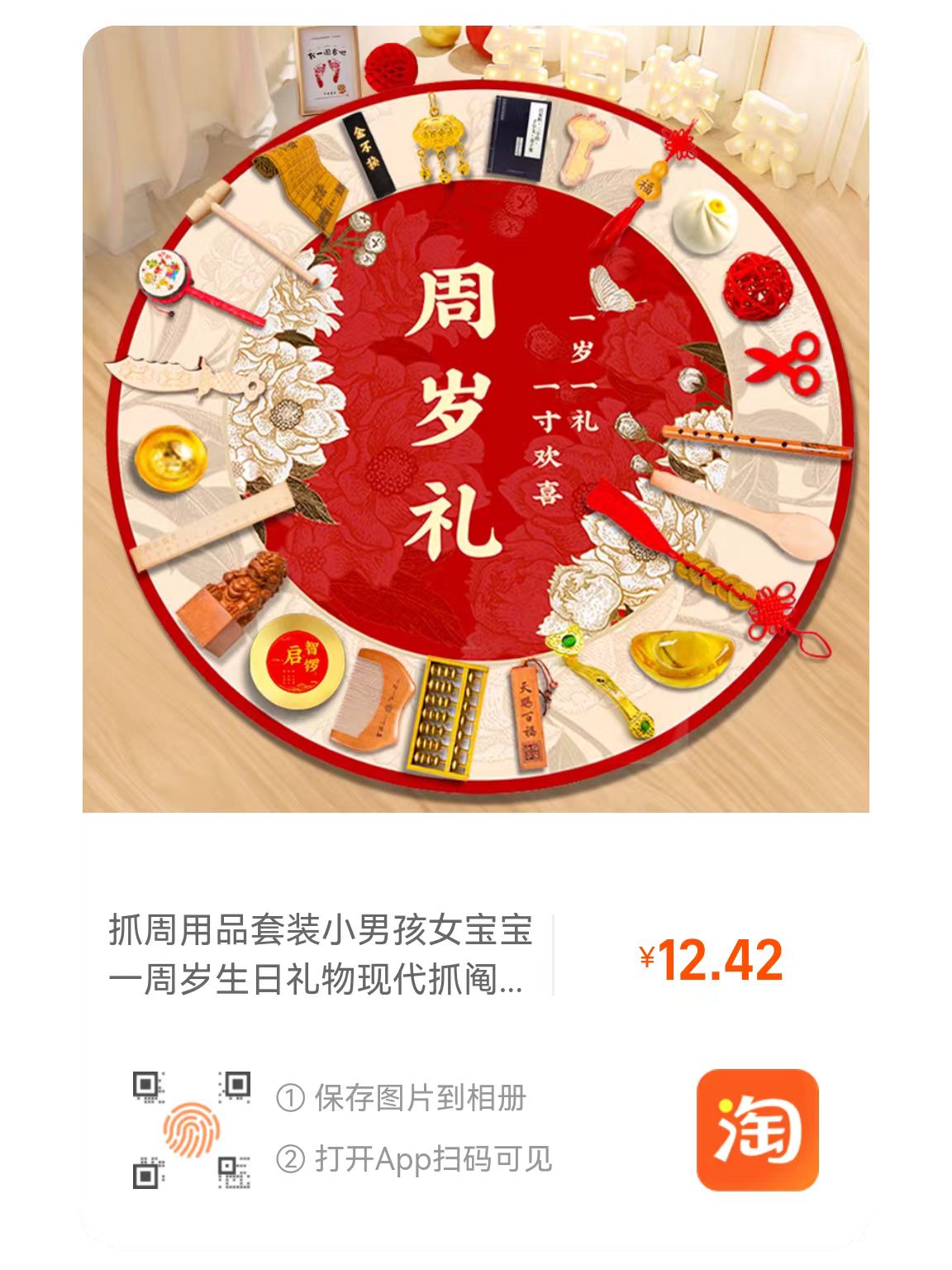
Things to consider if you are invited to a zhuazhou: It is customary to bring a sincere gift. While some more modern parents take the tradition lightly, many families still take the item grabbing very seriously, so avoid laughing at the results or making the tradition out to be silly. Go the extra mile and offer a true Chinese congrats by saying, “祝宝宝健康成长” (Zhù bǎobǎo jiànkāng chéngzhǎng) – “Wishing the baby a healthy growth.”
From how we dress to what we believe, when encountering different cultures, we are bound to find differences that intrigue us. One of the great benefits of expat life is seeing all the different ways things can be done, and sometimes we even end up adopting a few practices into our own ways of doing things. Let us know in the comments which of the cultural confetti shocked or impressed you the most!
Images: Stock, Janita Shahsavari