
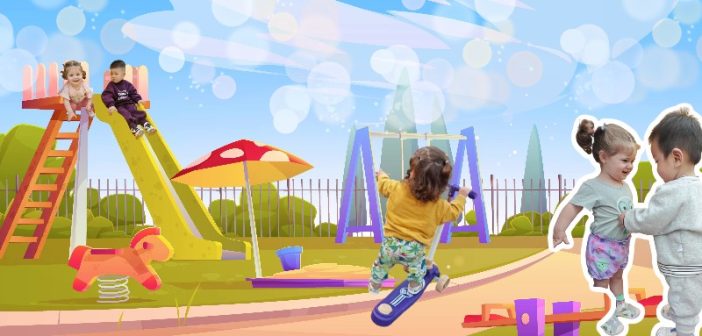
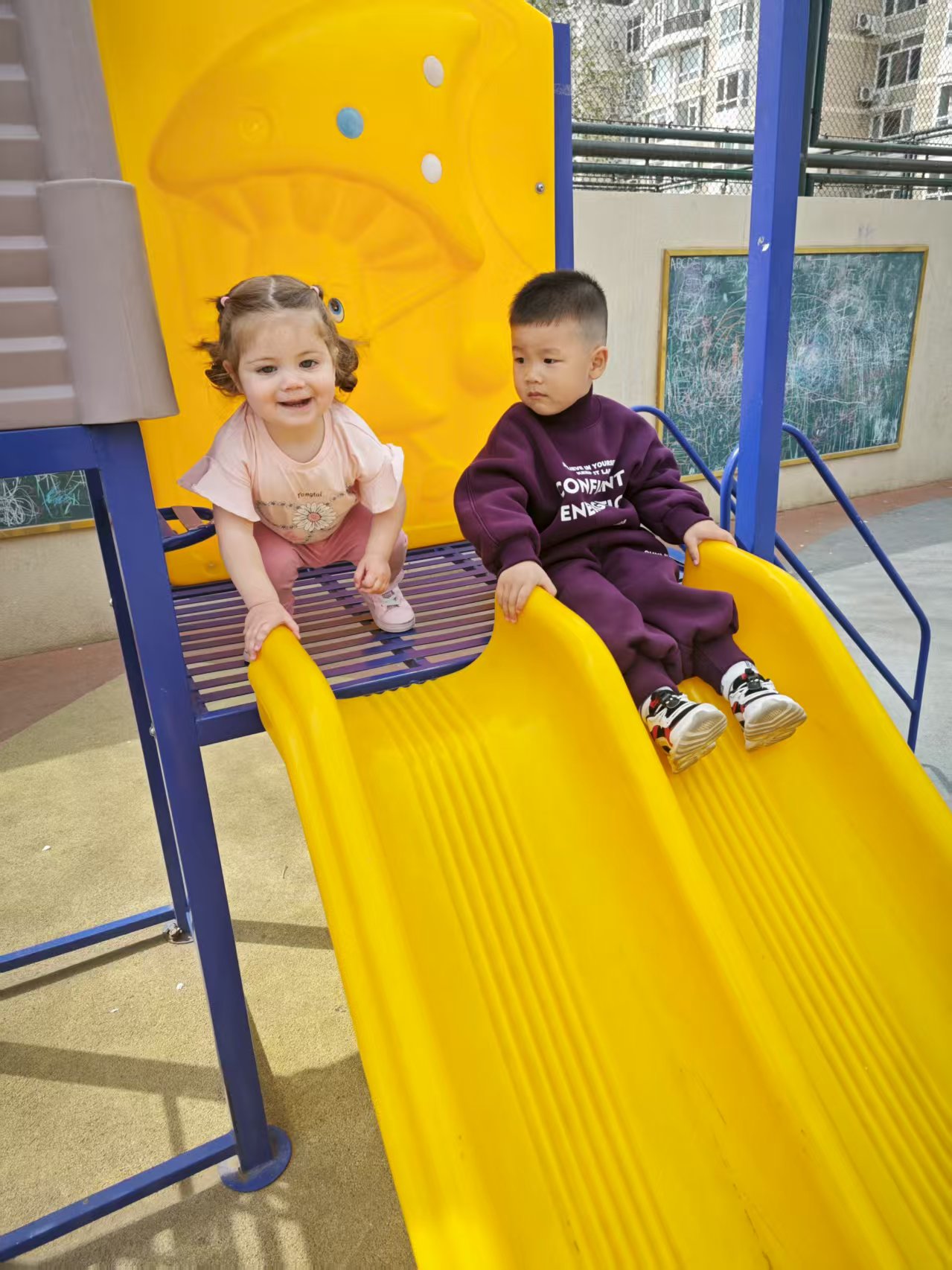
Since moving into a new community that has a little playground, we have been taking our toddler there daily to blow off some steam. While this has been a wonderful opportunity for her to make friends and start learning Chinese, it has also been a valuable learning experience for us as parents as Chinese playground expectations and politics can be more intense than actual politics. Between figuring out cultural norms and navigating unspoken etiquette while also tiptoeing around possible passive-aggressive parenting, I am here for you.
 Essentials: a LOT of snacks (for sharing), mosquito spray, a water bottle, toys you don’t mind losing to the playground abyss, a bike/scooter … oh … and a wicked sense of humor!
- Share or be judged eternally
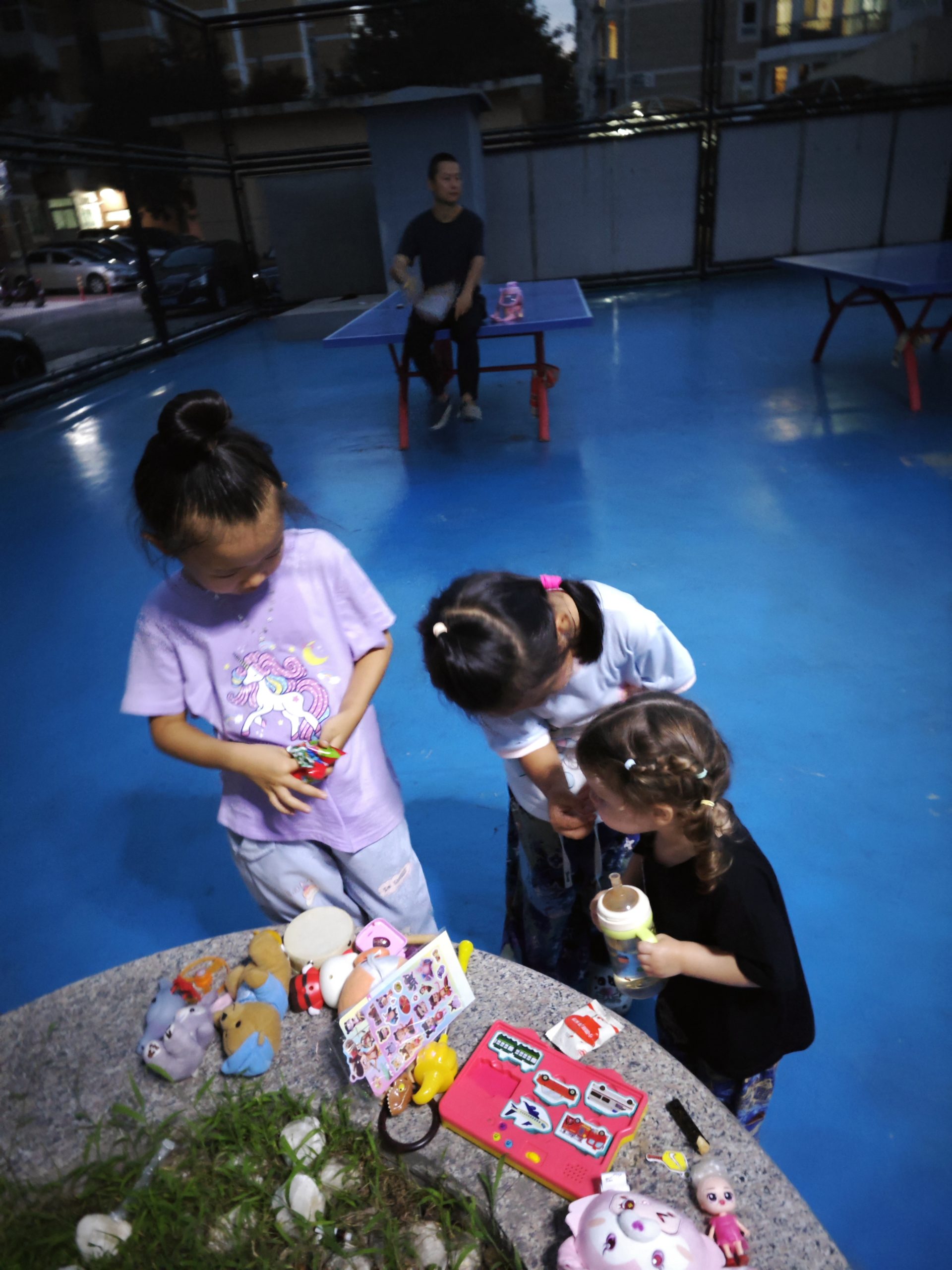
Being a collectivist culture, Chinese people tend to see the playground as one of those big glass-top-turning dinner tables (转盘餐桌 – zhuànpán cānzhuō) everything is placed upon and then passed around. If your child clings to their toy for dear life, you might be getting some funky looks. This is not simply a sense of politeness but a much more deeply rooted practice that encourages communal harmony and collective enjoyment. It is also important to note that they don’t enforce this aggressively, but rather paint it as natural and joyful. Here are some phrases you can choose from and learn in order to join in on the harmony:
 我们一起玩吧!– Wǒmen yīqǐ wán ba!
(Let’s play together! / Let’s all play!)
一起玩吧!– Yīqǐ wán ba!
(Play together! Shorter version of the previous one; very common)
分享玩具。– Fēnxiǎng wánjù.
(Share the toys. Direct instruction for sharing, simple and clear)
大家一起玩。– Dàjiā yīqǐ wán.
(Everyone plays together.)
轮流玩。– Lúnliú wán.
(Take turns playing.)
可以一起玩吗?– Kěyǐ yīqǐ wán ma?
(Can we play together? / Can I play too?)
给朋友玩一下。– Gěi péngyǒu wán yīxià.
(Give it to the friend to play with for a little while. Encouraging a child to share with another specific child)
交换玩。– Jiāohuàn wán.
(Let’s swap and play. / Trade toys to play.)
好朋友,一起玩。– Hǎo péngyǒu, yīqǐ wán.
(Good friends play together.)
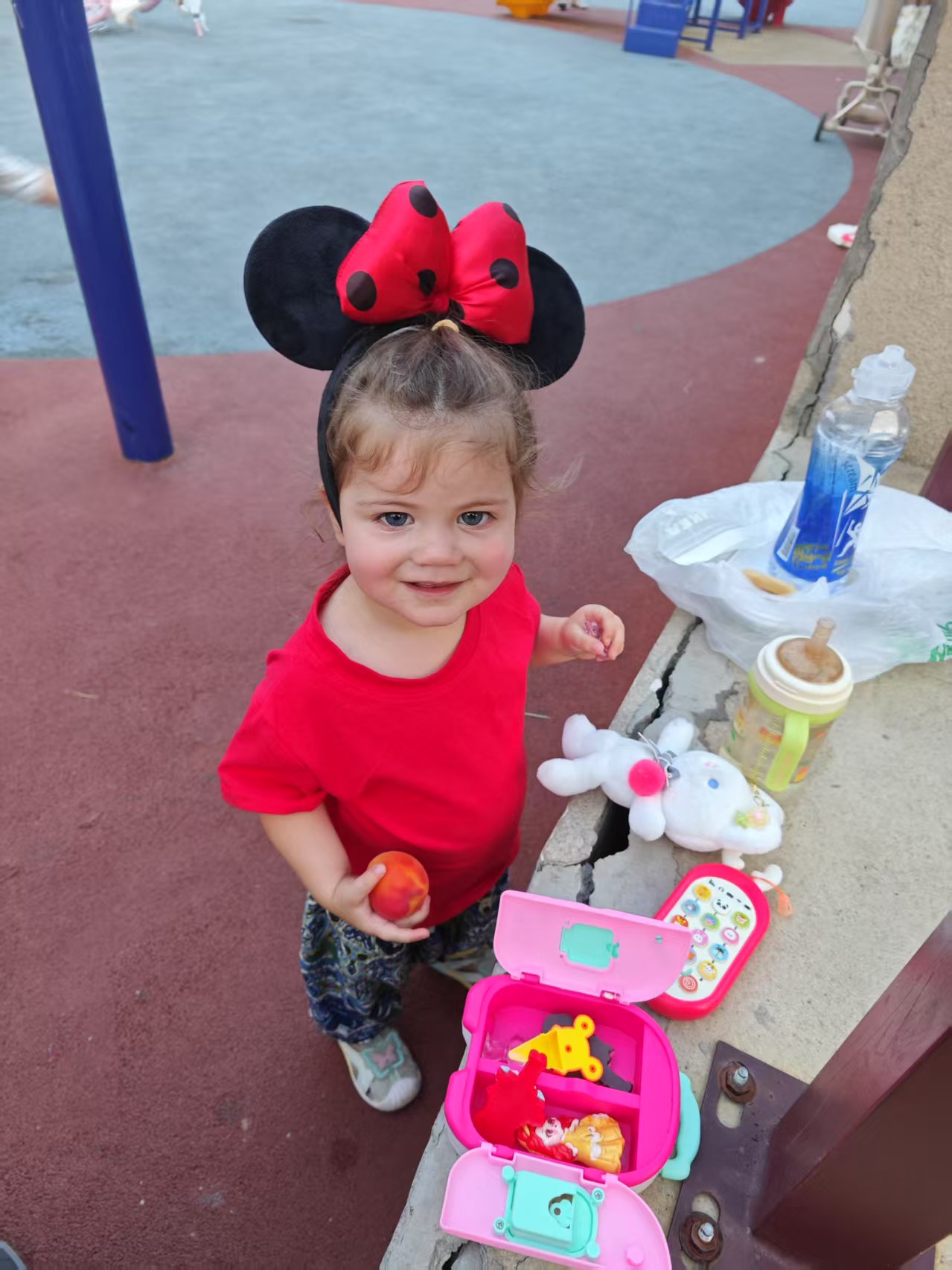 Pro tip: Take some decoy, inexpensive toys that your child has lost interest in and offer them to other kids in advance if you know your toddler still struggles a bit with sharing. Be prepared that those toys might not come back home with you, and brush it off as a tribute to the playground gods. Often, Chinese parents will encourage their kids to give your child their toy as a gift, but most of the time it’s just cultural politeness. If you’re going to let your kid accept the gift, it is polite to give something to the other kid in return. People especially tend to be extra giving to foreign children as a way of showcasing Chinese hospitality. Sometimes, we are ambushed with kids handing our daughter toys and snacks all at the same time, to the point where she doesn’t know what to take or leave.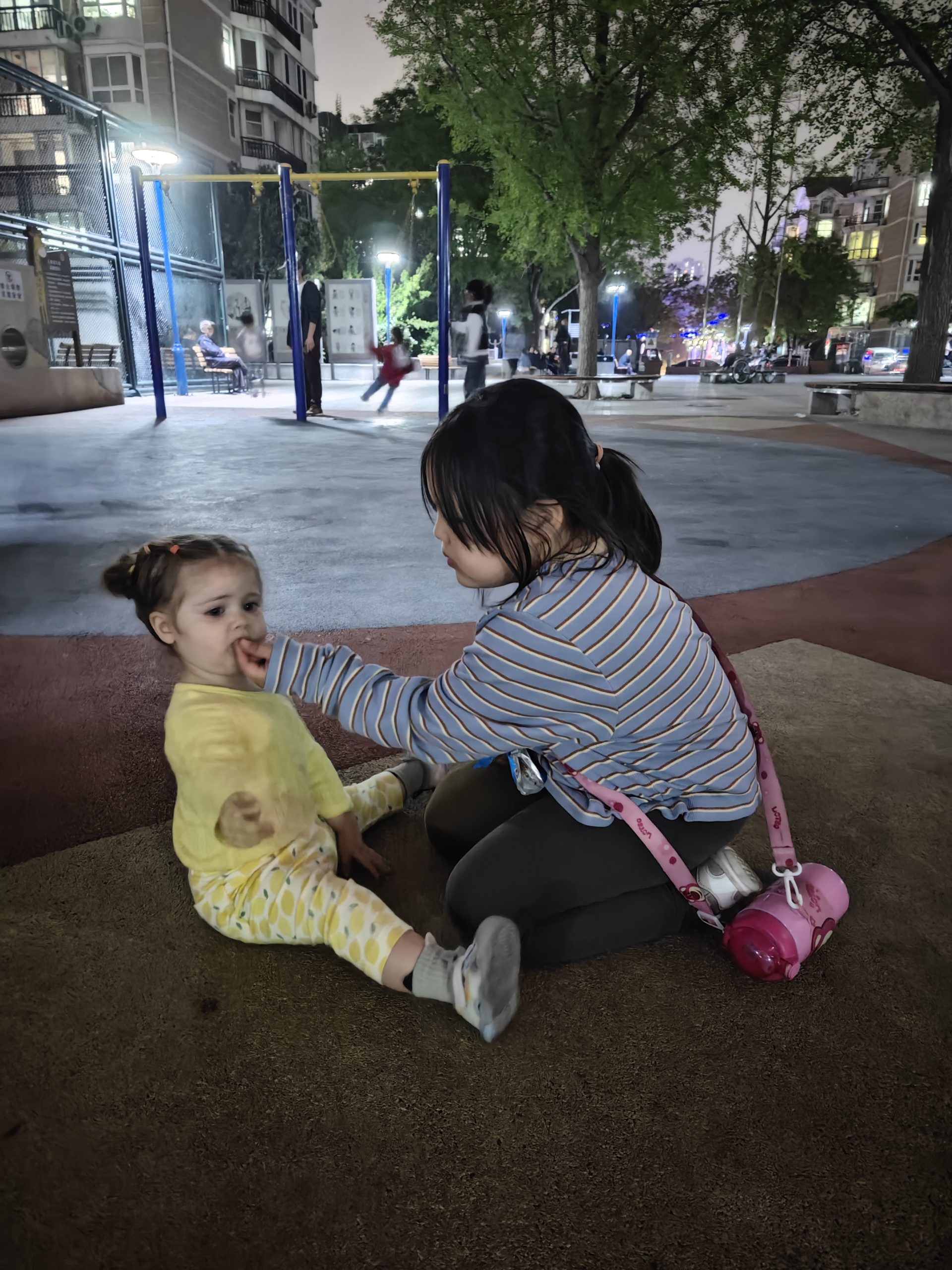
- The Snack-Exchange
Aside from the necessary water bottle that forever hugs the side of ayi or grandma’s hip, Chinese families always enter the battlefield equipped with ample snacks. We used to never bring snacks ourselves, considering we were a few steps away from home and usually came right after meal times, but snack-bringing became a practice we quickly learned to adopt! If your little one is like ours and will gladly accept anything edible handed to her, then best be sure you will be expected to offer snacks in return to the friendly giver. There are however, some unwritten rules you need to abide by and consider:
- Don’t bring outlandish snacks like kale chips or quinoa puffs, and don’t bring anything too unhealthy, like chocolate. Stick to local crowd-pleasers like fruits – but single-serving stuff like grapes or bananas. Germ-sensitive parents are cautious about their kid taking food prepared in other people’s homes, and it puts the parents in awkward positions to make their kid turn it down. Just stick to local crunchy staples like 旺旺仙贝 (Wàngwàng Xiānbèi). Fun fact: Wàngwàng means prosperity, which is quite cute when considering the sharing culture that they embody.
- People won’t usually consider allergies or choking hazards, so keep a watchful eye, especially when the crowd descends, if your child has any known allergies or is still small enough to possibly choke on a windpipe-sized snack. Be wary of just snatching snacks away preemptively that seem inappropriate, as the snack sharing culture embodies trust and generosity, rather than making the giver “lose face.” Be gentle about your approach and check out some of the useful phrases below. Tip: If you’re really uncomfortable about something your kid took, you can always tell a little fib and say your kid is allergic: 他/她过敏 – Tā guòmǐn (“He/she’s allergic”).
- Bring a few extra snacks that you can hand out and a little bag for trash, as you are bound to be handed quite a few half-eaten things by your toddler, who has sampled the buffet of generous offerings and only really enjoyed a select few of them. Here are some Taobao links to snacks that have worked well for us and that local kids love.
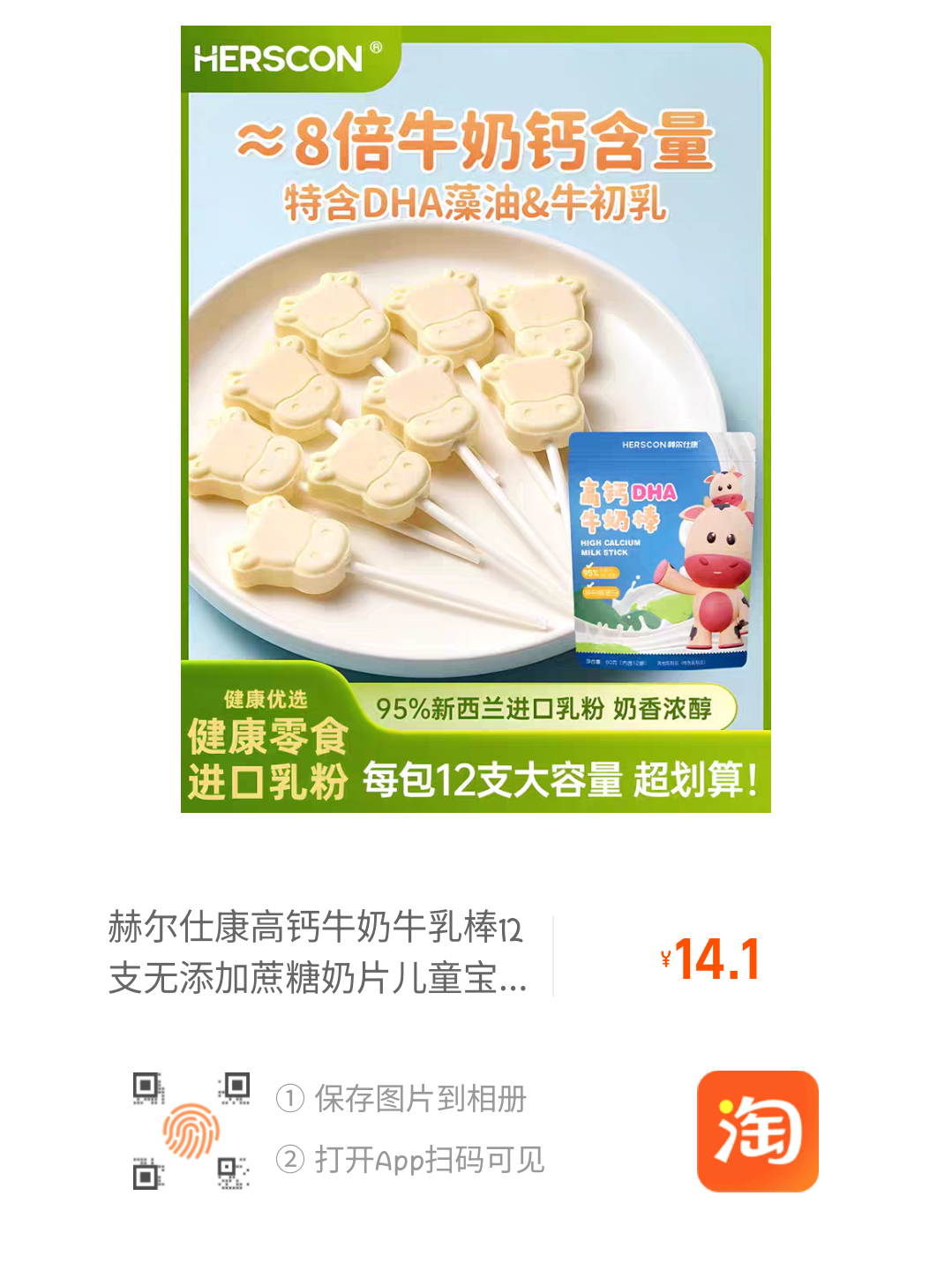
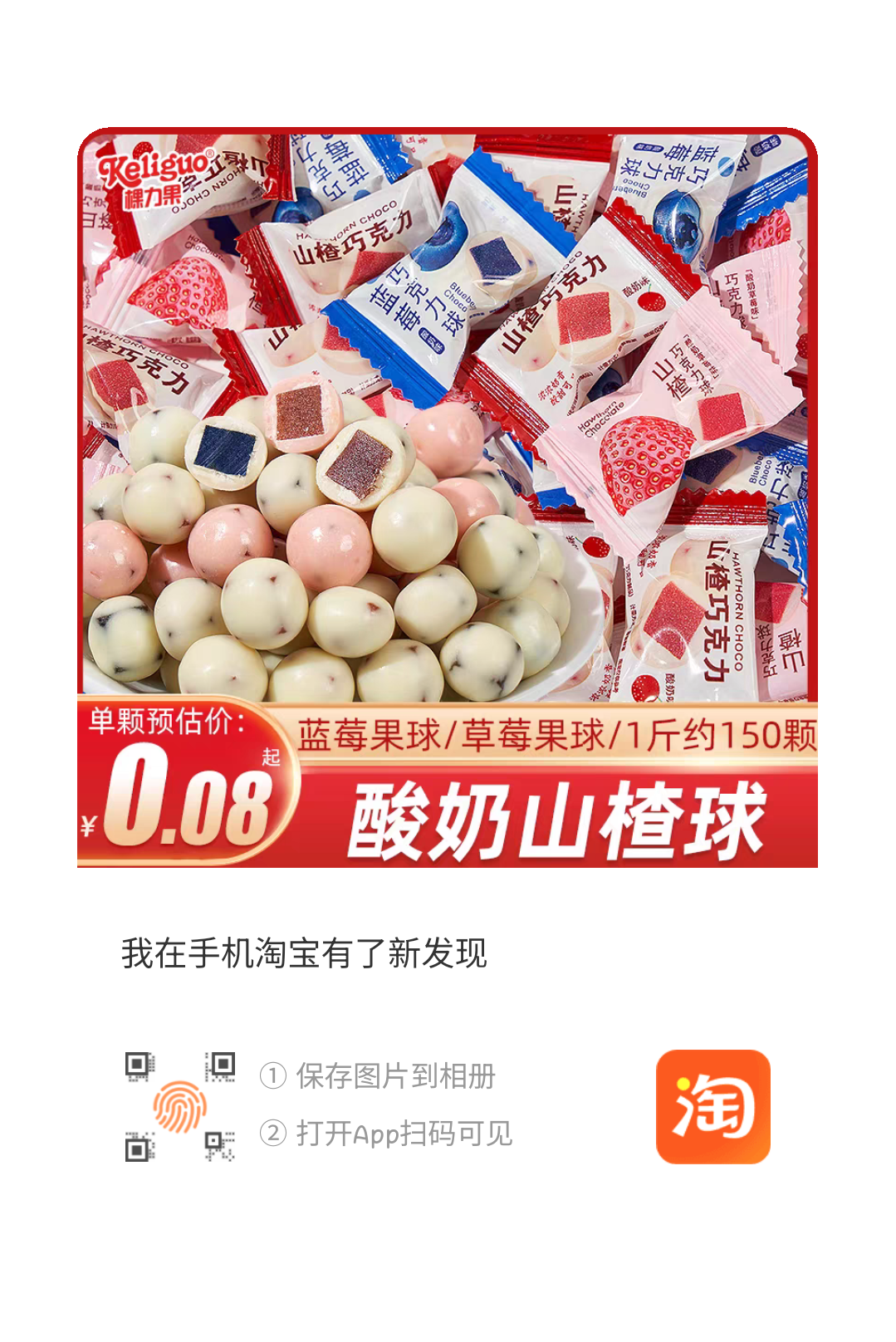

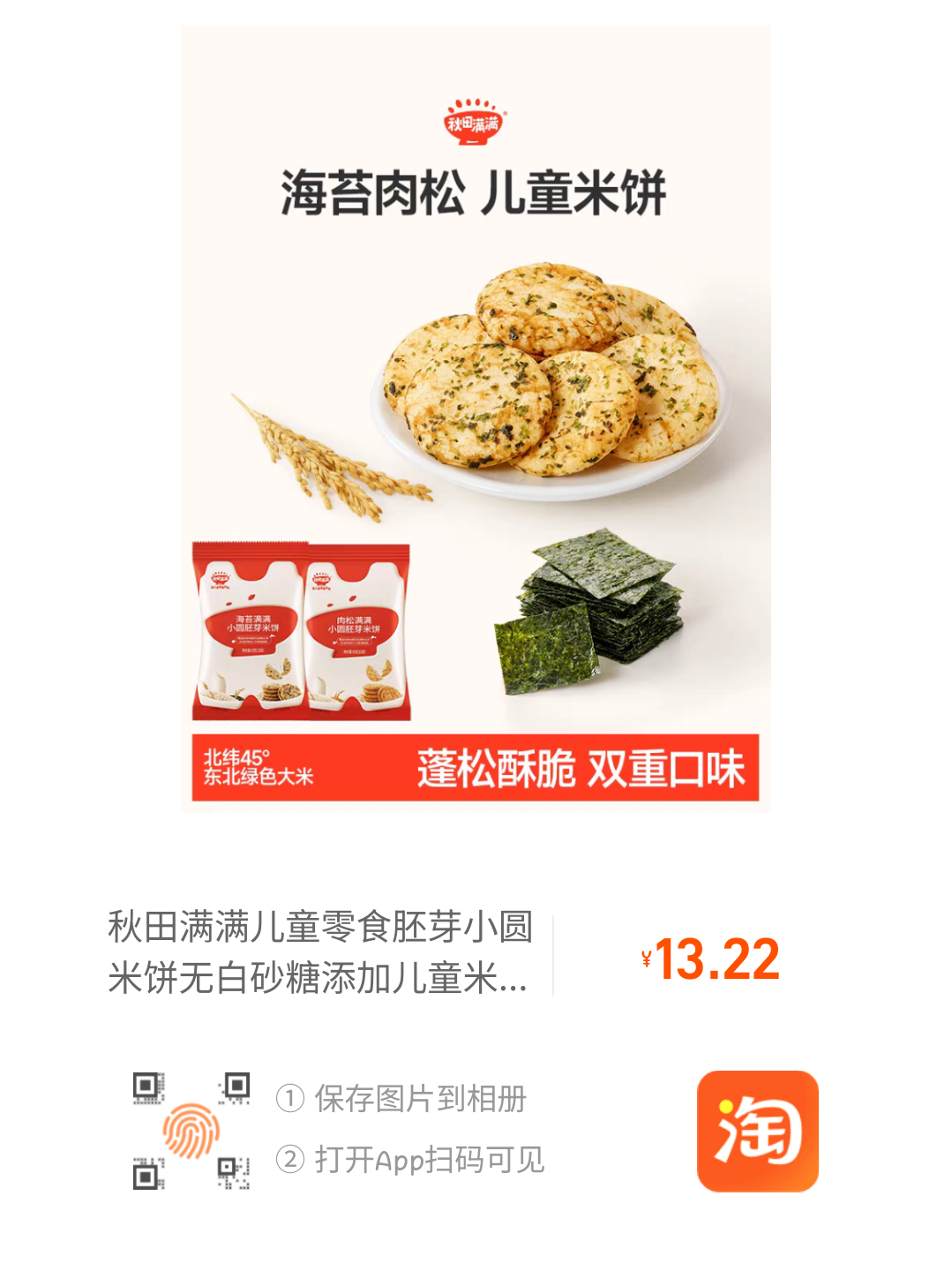
Helpful phrases:
Offering a snack (polite & safe):
吃这个吧,安全的。– Chī zhège ba, ānquán de.
(Meaning: “Eat this, it’s safe.”)
Refusing politely (general):
谢谢!他现在不饿。– Xièxie! Tā xiànzài bú è.
(Meaning: “Thank you! He/She isn’t hungry right now.” A gentle, common refusal.)
谢谢!我们会在家吃 – Wǒmen huì zàijiā chī.
Meaning: “We’ll eat it at home.”)
Warning of choking hazard (urgent but polite):
小心!这个会卡住喉咙!– Xiǎoxīn! Zhège huì kǎzhù hóulóng!
(Meaning: “Careful! This can get stuck in his/her throat!”)
Warning of allergy (essential & direct):
他/她对这个过敏!不能吃!– Tā duì zhège guòmǐn! Bùnéng chī!
(Meaning: “He/She is allergic to this! Can’t eat it!”)
Encouraging safe sharing (to another child):
给他/她一小块吧。– Gěi tā yī xiǎo kuài ba.
(Meaning: “Give him/her a small piece.” Useful if a child offers your toddler something too big.)
Bonus Phrase (If your child grabs):
先问一下!– Xiān wèn yīxià!
(Meaning: “Ask first!” Simple reminder before taking.)
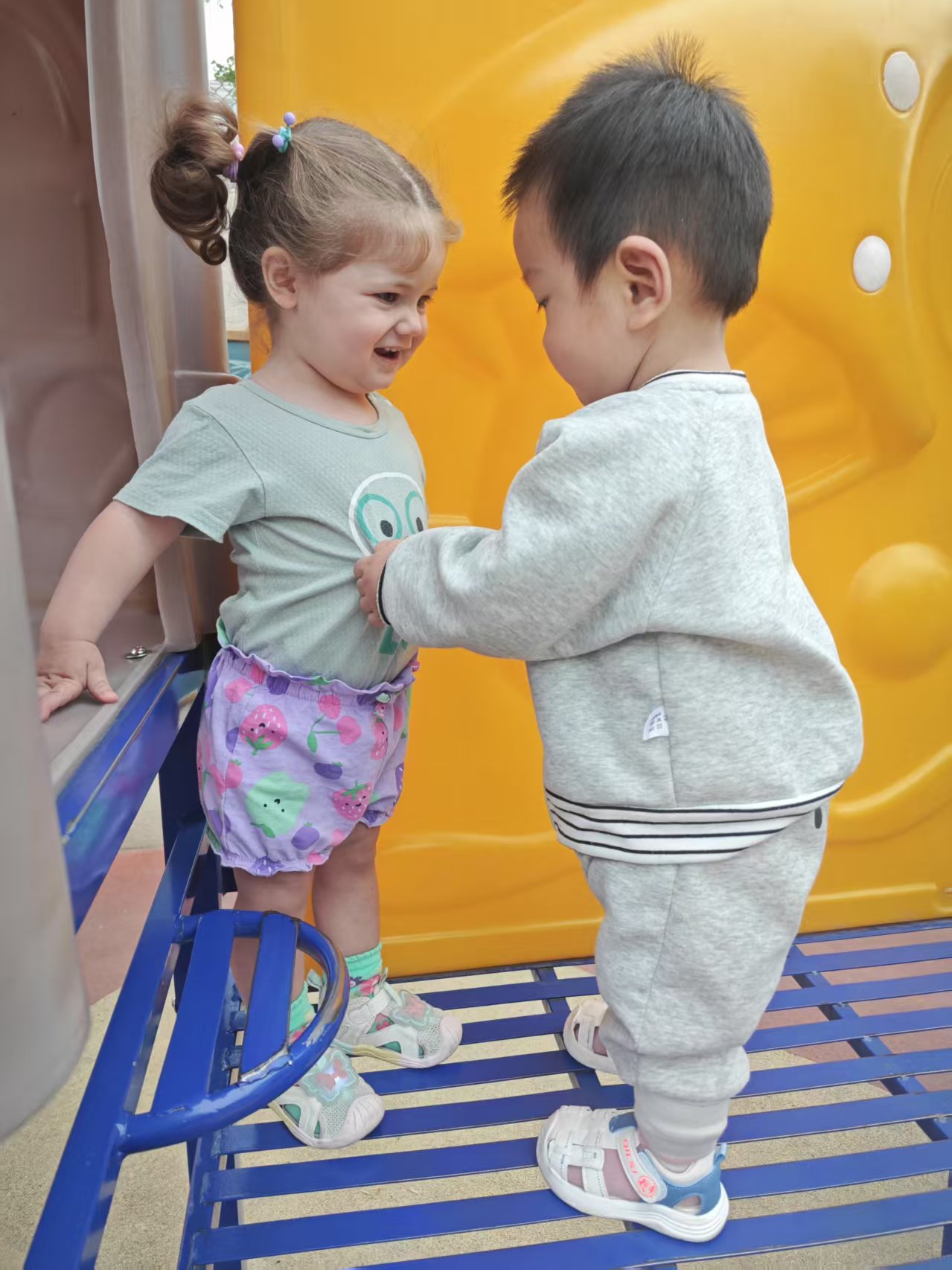 Physical friendliness
From being able to express that your little one doesn’t like their hair touched to avoiding accidentally offending your Chinese playground pals and all the many “wòshǒus” (handshakes) in between, one can never be too equipped for navigating cross-cultural physical contact differences. Here are some of the physical contact occurrences to avoid and some helpful phrases when trying to set your boundaries without becoming the playground pariah.
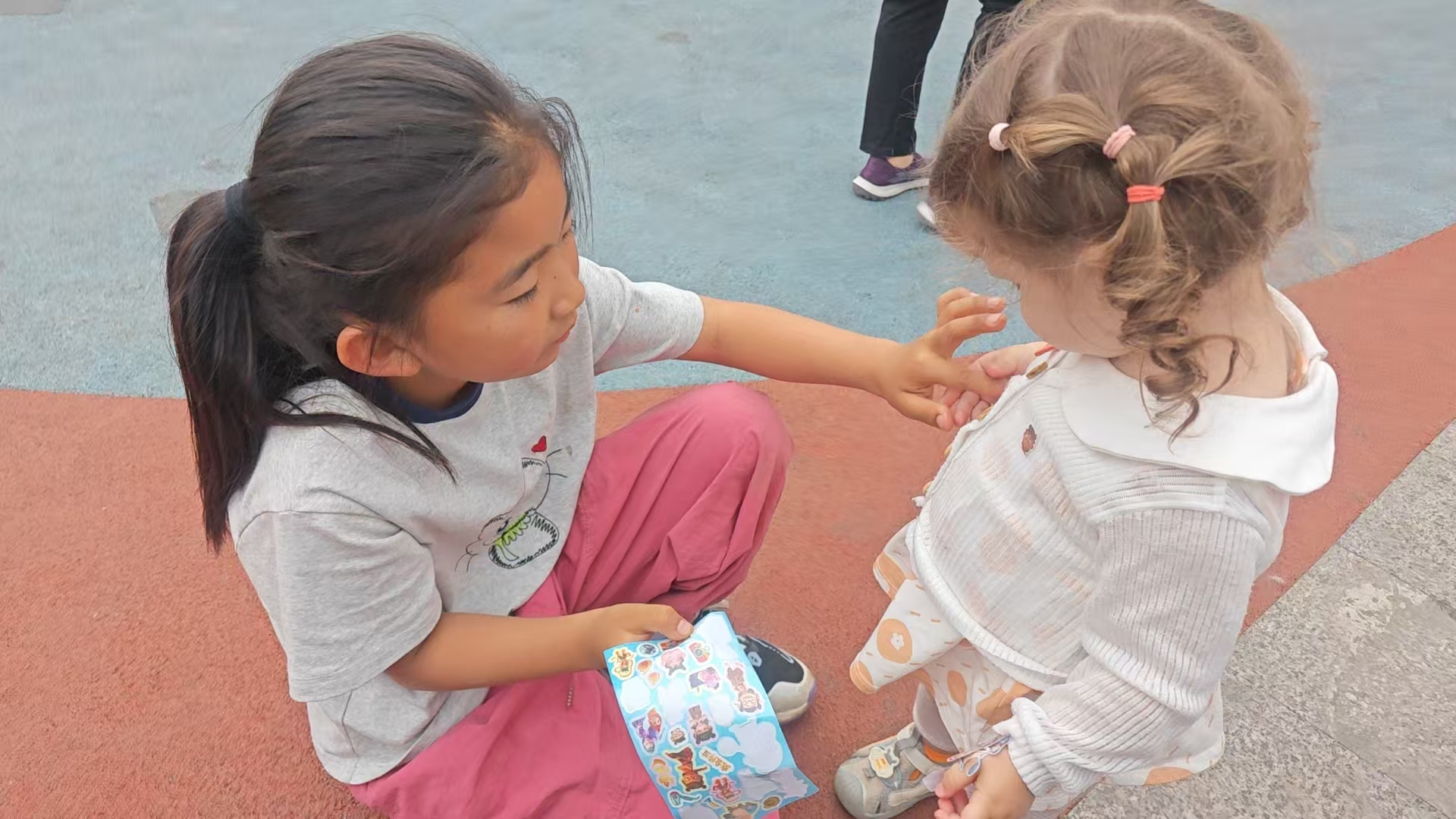
Culturally inappropriate:
- Hugs and kisses: While many cultures consider this inappropriate as well, many of us like to express kindness with hugs, not to mention kids who innocently want to hand out kisses to their new friends. In China, however, this is only done by extremely close family members, and you and your babies are better off sticking to handshakes.
- Eye contact and touching simultaneously: Wait, what!? Eye contact combined with touch is often considered confrontational in Chinese culture, so if your child likes to examine their new friend’s eye color while clinging to their arm, it might be a good idea to intervene and distract them with a fun high-five (击掌 jīzhǎng) instead.
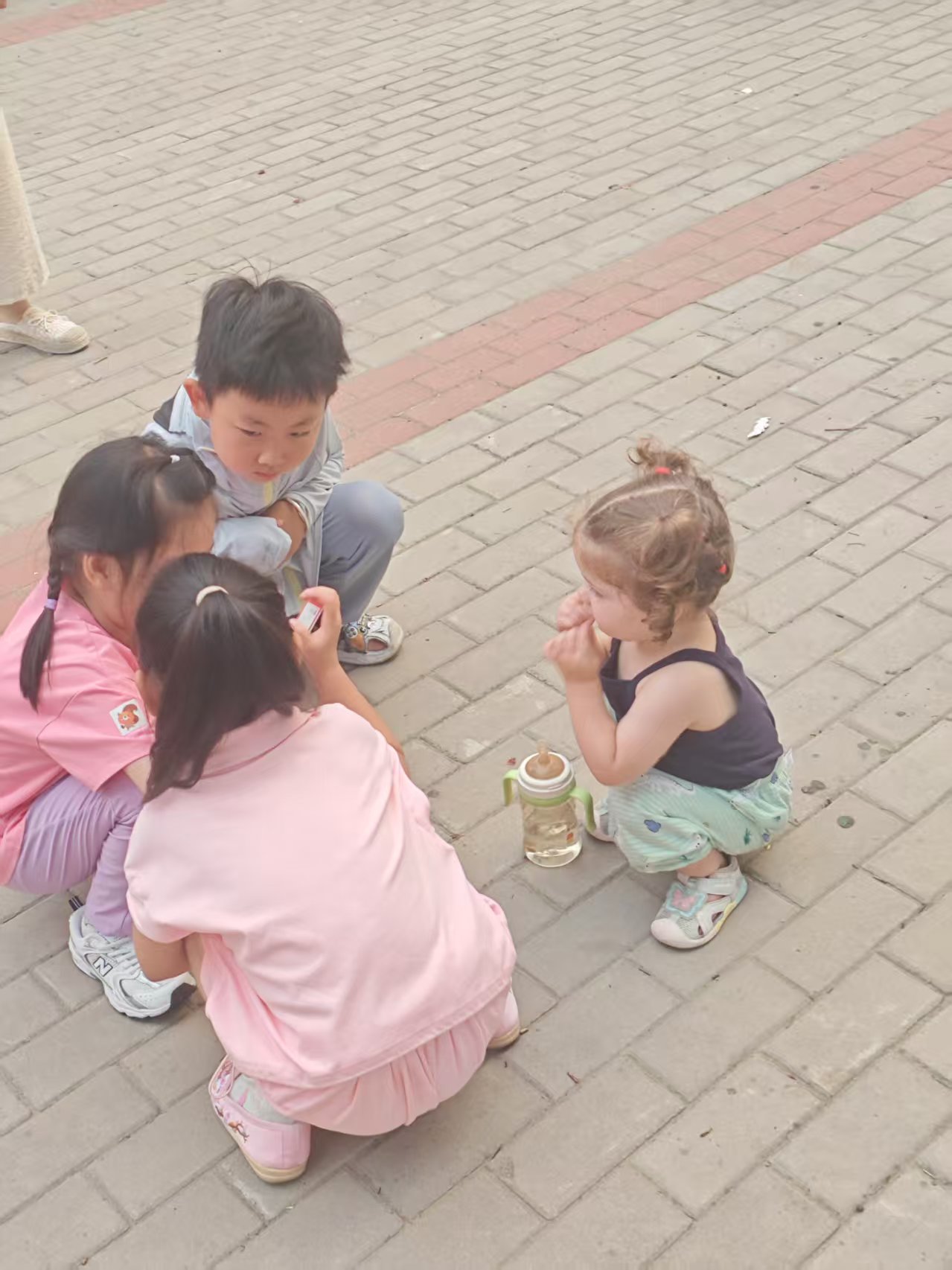 With our own cultural and personal physical affection preferences, it is important to enforce boundaries without ruining potential friendships. In China, a grandma’s arm grab isn’t a kidnapping attempt, it’s a 热情安检 (rèqíng ānjiǎn) – a “passion security check.” Her mission? To verify your child’s chubby cheeks are 100 percent real. Understandably, this might upset your toddler. Along with fending off the unwanted hair touchers, these phrases can help you be polite about your own no-nos.
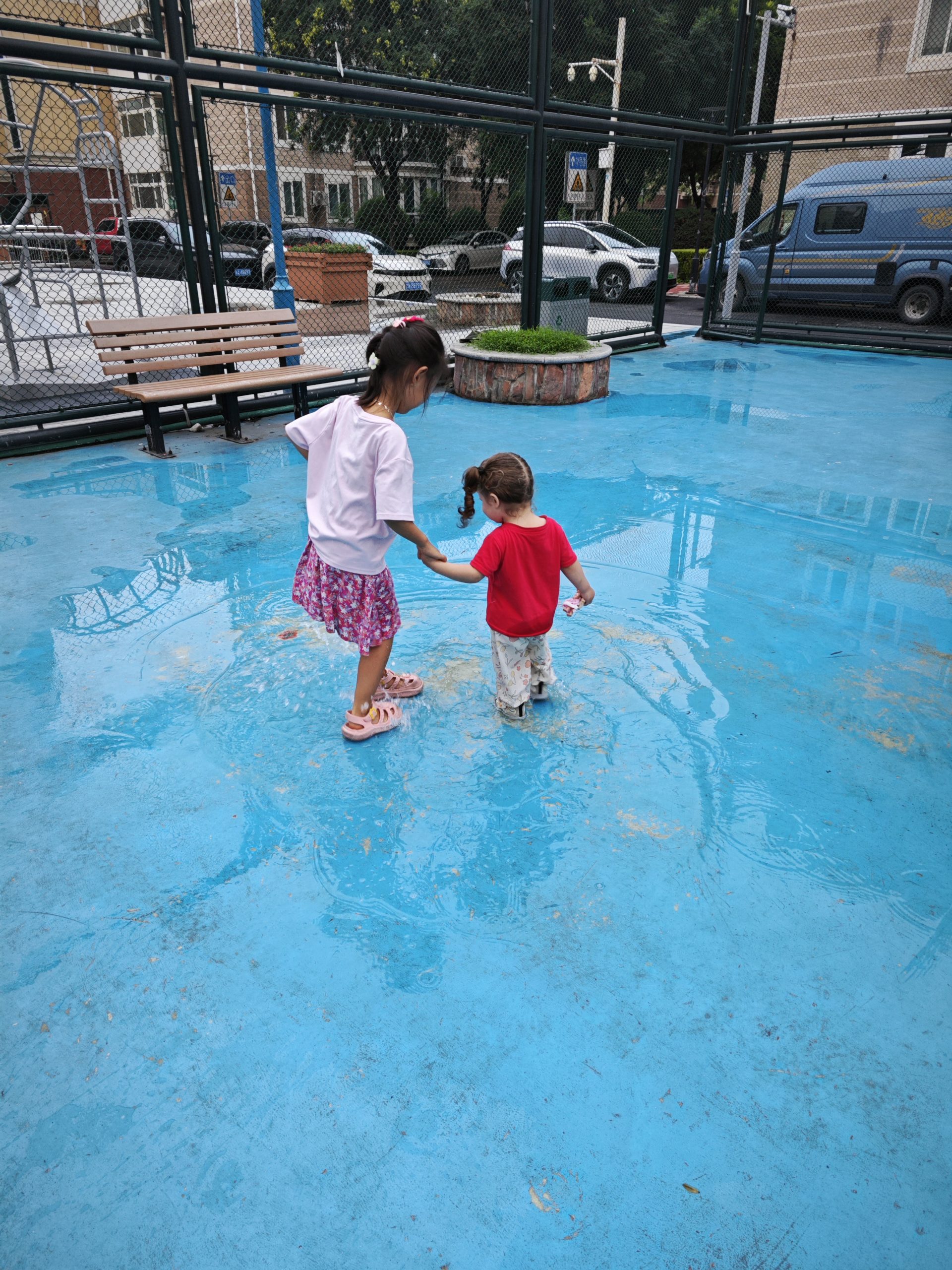 Useful phrases:
Gentle refusal:
抱歉,但她不喜欢别人碰她的头发?– Bàoqiàn, dàn tā bù xǐhuān biérén pèng tā de tóufǎ.
“Sorry, but she doesn’t like people touching her hair.”
Politely declining hair touching:
请不要摸头发,谢谢!– Qǐng búyào mō tóufa, xièxie!
“Please don’t touch her hair. Thank you!”
Explaining cultural differences:
孩子不太习惯这样接触,谢谢理解!– Háizi bú tài xíguàn zhèyàng jiēchù, xièxie lǐjiě!
“The child isn’t very used to this kind of contact—thanks for understanding!”
If a child is grabbed/hugged:
她喜欢自己玩。– Tā xǐhuan zìjǐ wán.
“She likes to play on her own.”
Granny grabs:
谢谢您喜欢他!他有点害羞 – Xièxie nín xǐhuan tā! Tā yǒudiǎn hàixiū.
“Thanks for liking him! He’s a bit shy.”
 Raising little ones in Beijing paints life in vivid, unexpected colors and slowly attunes us to rhythms of a culture not quite our own. It’s in the whirl of playground chaos, the grace of redirected touches, and the shared crunch of 旺旺仙贝 that we learn to hold boundaries gently, receive generosity openly and remix belonging in the in-between. And while it can feel messy, discovering your own blend of “fitting in” versus remaining authentic? That’s the quiet art of expat life: the freedom to parent differently, yet deeply.
Images: Janita Shahsavari