
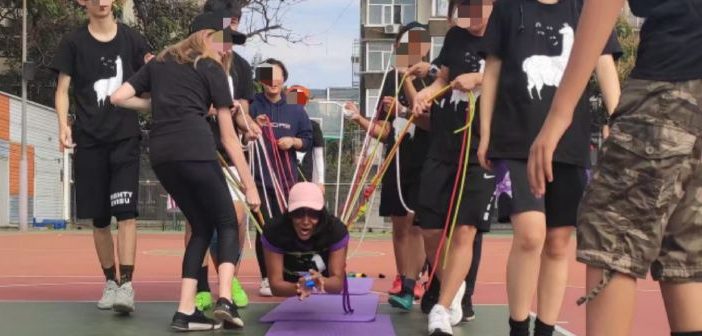
Are you as curious about who’s shaping the young minds of our kids as we are? We’re sitting down with teachers and staff from Beijing’s vibrant international schools to learn more about their unique stories, experiences, and perspectives. From the challenges of adapting to a new culture to the joys of building connections across borders, these conversations will shine a light on those who make up our education community. Whether you’re part of an international school yourself or simply curious about life in Beijing’s globalized education hubs, join us as we get to know the people behind the classrooms, hallways, and campuses that shape this extraordinary world.
This week’s #BeijingEducators features Dr. Benita Sumita, associate curriculum director at Tsinghua International School (THIS).
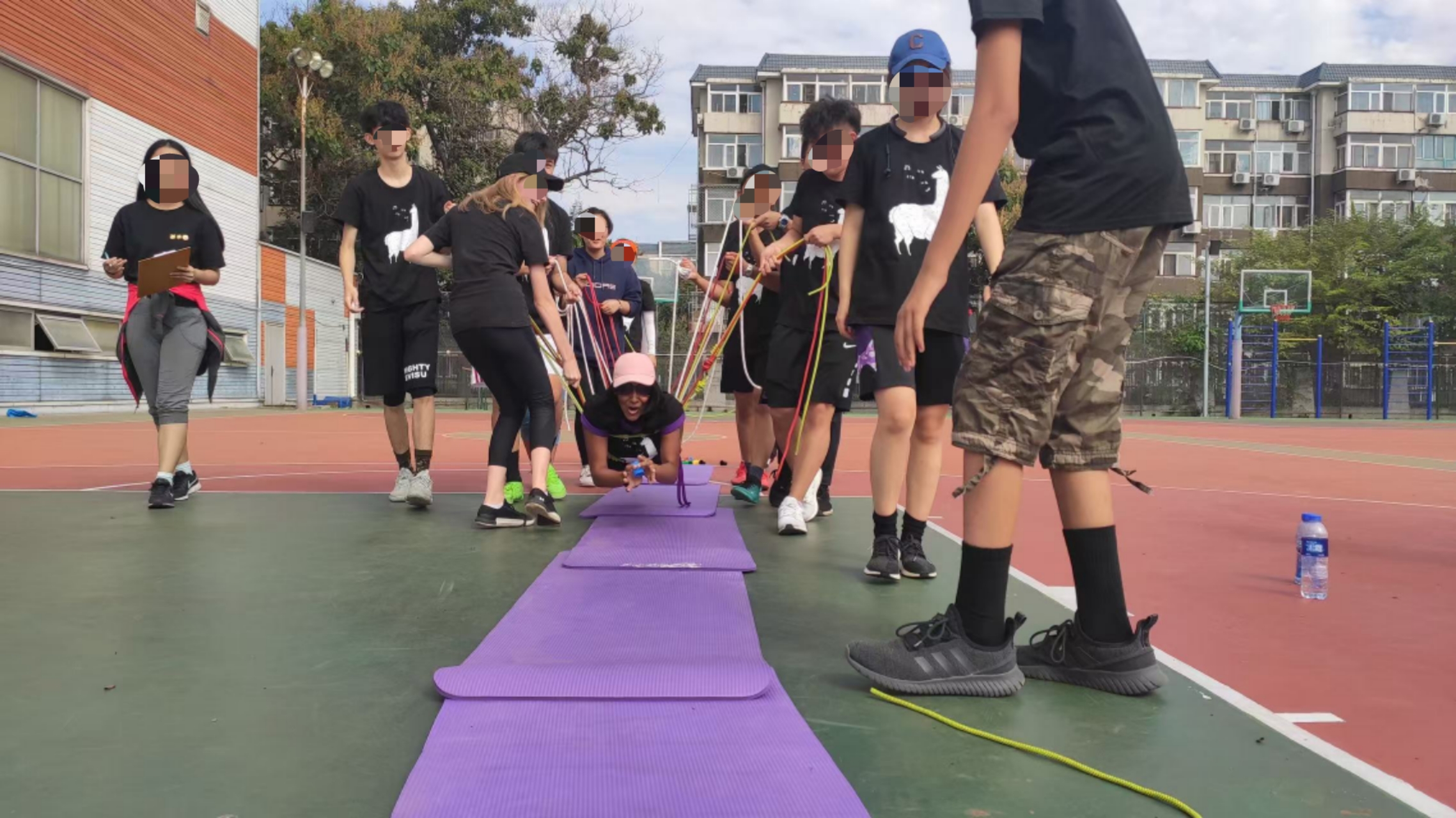
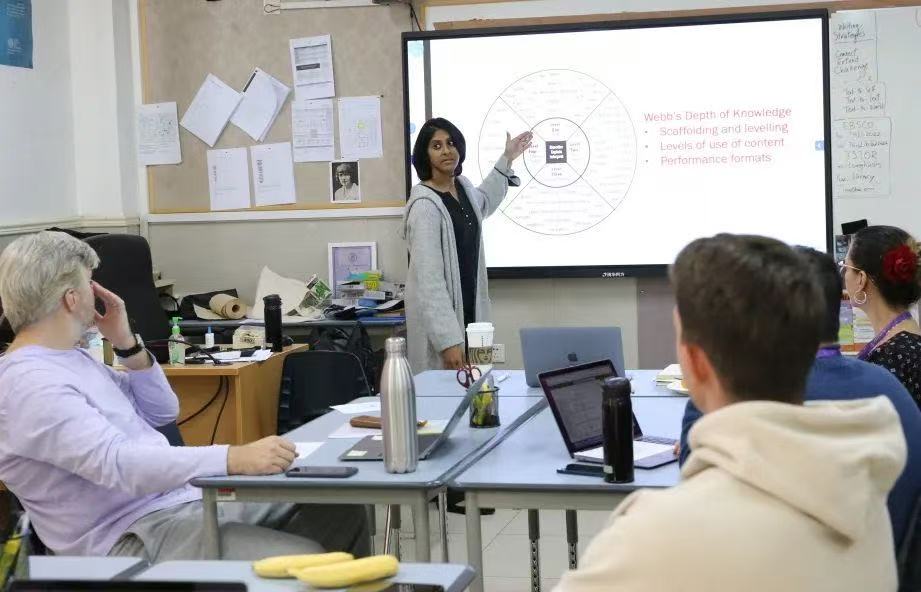 I first met Dr. Sumita back in 2017 and was immediately taken by her charisma and the politeness of her young son. Years later, I had the privilege of training her students at the jingkids summer internship. These students were outstanding, and they raved about what an inspiration Dr. Sumita was on campus.
So, who’s this extraordinary woman, and why do we all adore her?
“We moved from the UK to Beijing for work and have been here for 12 years now. My son was born here. I was still completing my PhD in the UK when we moved, and so between that and my son, there wasn’t much time for anything else,” says Dr. Sumita.
 Let’s get to know you a bit.
You took a career gap for your Ph.D. and family. Did this period contribute to your professional growth?
If raising another human doesn’t develop you personally and professionally, then nothing else will. However, I believe that pedagogical acumen is significantly influenced and honed by tacit knowledge and experience, as scholars such as Eraut and Hughes have shown in their research. Theory and training are essential and fundamental, but teachers contextualize these to suit the school culture and ethos, student needs, and other factors. This is what I love about THIS and our teachers because though each teacher has rich proficiency in their pedagogical content knowledge, there isn’t one person who isn’t constantly seeking deeper expertise from colleagues, daily class experience, and through reflection.
How would you integrate your passion for sustainability into a school’s curriculum or culture?
Sustainability is a necessity, if not a disposition, that each of us must have and/or adopt. The drive to make it part of the school culture started with a project in the International Relations course I was teaching in high school. Groups of students worked on a sustainable development goal (SDG) of their choice for a year. Their research and solution were required to have an impact on the school community. Students also decided how impact and successful impact would be measured. It was encouraging when students in one year were able to convince the school to stop printing report cards and instead send them electronically to parents. Through monitoring the printers on each floor for a year, the students identified a small solution.
Their focused efforts also gained accolades in the 2022 international SDG competition (https://www.globalsocialleaders.com/sustainable-spartans/#next). We also have capstone projects in grades 5 and 8. In consultation with the grade-level teachers, the THIS capstone initiative focuses on sustainability through themes of social responsibility. We also have many student-driven clubs – Roots & Shoots, Sustainability Team, Animal Conservation Team, and more – that work towards creating a sustainable community in small ways. Hopefully, in the long-term, it becomes the norm.
What do you like to do with your family on weekends?
Weekends can get busy with football practice, taekwondo and other interests that my son is into. But we like to try out different cuisines, new restaurants, brunches, and we never miss The Beijinger’s Juicy Burger Fest. So, I guess our weekends get foodie quite often. We also go-kart quite a bit a well.

Let’s talk about your teaching style.
What does being the associate curriculum director at Tsinghua International School mean? What’s an average day like for you?
My role as ACD is defined by the vision of and reports to THIS’ academic principal. It involves meeting with teachers about their curriculum scope and sequence, with department heads about vertical alignment, assessment, rubrics, and all that good stuff. My job is not possible without collaboration with teachers, department heads, and division heads. So, my typical day involves communicating with different people, listening to ideas, reflections, and feedback and then visualizing programmatic options.
As ACD I also lay out plans for weekly professional learning. At THIS, our professional learning includes teacher meeting time, in-house workshop rotations, grade-level pedagogy sessions, and this year, we also introduced continued professional learning that enables teachers to work on their individual goals as decided with their goal coaches.
Your philosophy mentions empowering students to “find their own voice.” How do you implement this in your classes?
The profession of teaching has been transforming since I was in school, and today, the education discourse is buzzing with the mushrooming of AI threatening the need for a teacher. Doesn’t matter whether it was back in my school days or today, the core essence of the profession is about teaching students to think – not what to think, but how to think. Doesn’t matter which class you walk into at THIS, teachers are guiding students to find their writing voice, reading voice, analytical voice, transformative voice, etc., all of which is rooted in teaching students how to think.
Let me give you an example from my AP Psychology class. When teaching students about how memory impacts behavior and mental processes, I designed an experiment to examine encoding of information and short-term memory that we carried out in class with images for one group vs. descriptions of the images for the other group. Without going into too much detail, students demonstrated recall through a survey to complete the experiment. They were then required to use the data to hypothesize about short-term memory and human behavior. The learning, examining, doing, experiencing, and applying create opportunities for thinking and rethinking, especially when it involves real-time experience and an environment that encourages group discussions. Towards the end of this topic on memory, student groups also designed their own experiment that demonstrated their collaborative thinking voices. I guess John Hattie (2008) says it beautifully when he states, “The more the student becomes the teacher and the more the teacher becomes the learner, then the more successful are the outcomes.”
You’re very involved in your students’ extracurricular curricular. Have there been any extraordinary projects that your students have done that stand out?
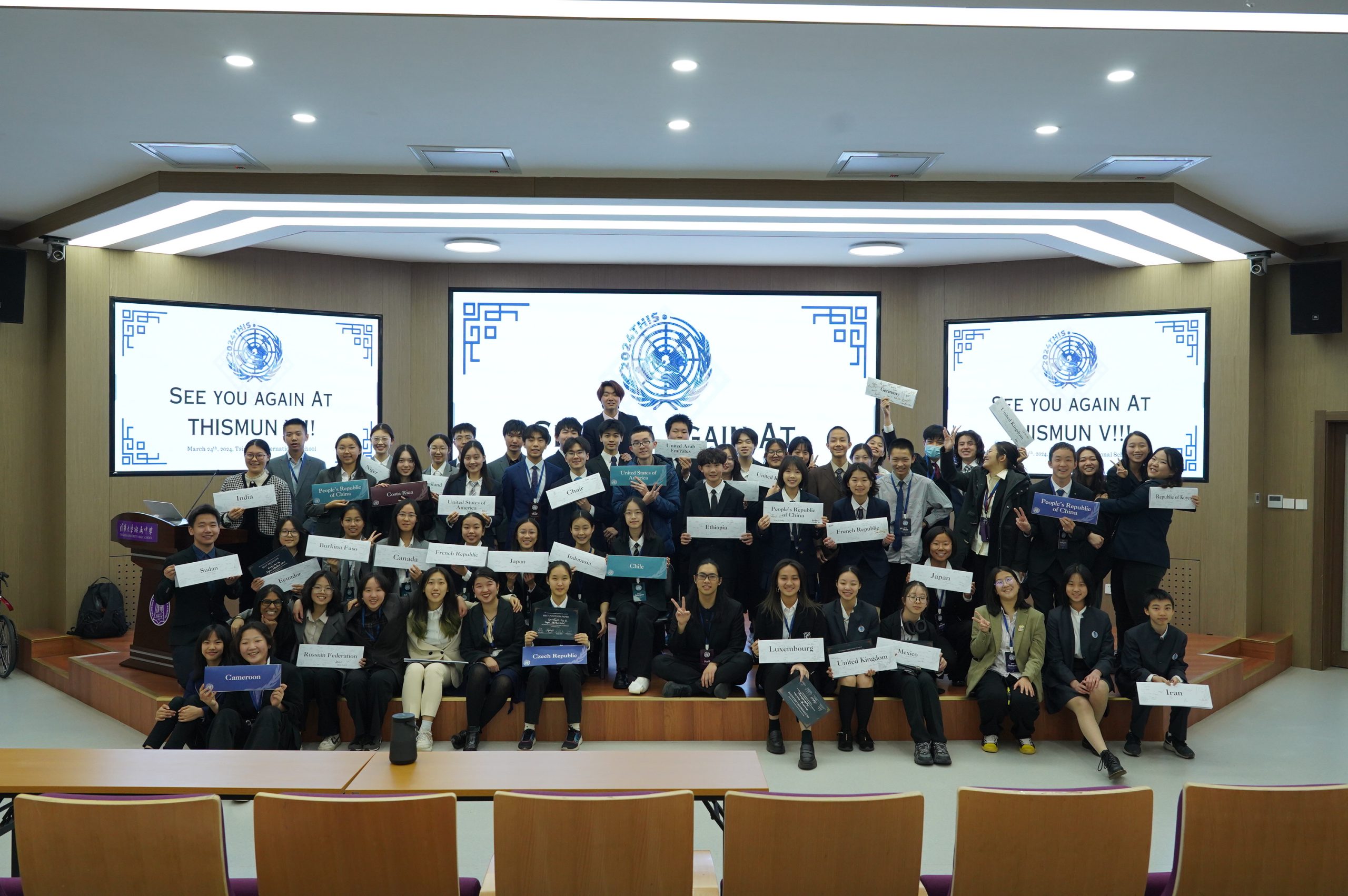
I am really proud of THIS’ Model United Nations (MUN) club, especially because it is the students who’ve made it what it is today. We hosted our fifth annual conference in March. The students put in a lot of effort every year, conceptualizing, planning, organizing, and running the conference. The conference planning is ongoing even while the student leaders also run weekly club sessions focused on skills and content training. Sustaining a school club is no easy feat for students, and it is impressive how they collaborate, feed off each other’s energy, and bring out the best in each other.
 We’d love to hear your thoughts on these:
If a parent struggles to engage their kids in a required course, what would you recommend?
A parent’s struggle, most often, comes from the fact that they want the child to perform or engage to a pre-determined level of expectation. I guess what I am trying to say is parents should not have pre-determined expectations. Free of the shackles of expectations, a parent can be a strong enabler for learning at home. I have tried out a few of the strategies below with some success:
- Establish a study routine at home. Depending on the child’s age, this includes planning with your child the amount of time devoted to studying, reviewing, reading, etc., and the amount of time for breaks. It may be worth considering if your child would like to start with the hardest subject, or a subject they aren’t interested in, and move on to subjects of increasing interest. It goes without saying that the routine must be followed, whether there is homework or not. Homework is not studying.
- Establish a structure at home. As much as we want our children to have freedom and privacy, as a parent we also want to set them up for success. So, when I first sat with my son and helped him come up with a study routine, he was told that he couldn’t study in his room. He resisted at first, arguing about trust and privacy. I held my ground, saying it was temporary and depended on his work, and thus it was really up to him. Study time began at the dining table; in all honesty, no one was watching him, but he didn’t really know that. Now he studies wherever he wants, but he often chooses to start at the dining table.
- Establish reinforcements. One of the oldest strategies for learning is conditioning. A reasonable and proportionate reward (time on a device, a favorite snack, etc.) normalizes wanted behavior. Punitive measures may work to a certain extent (revoking device privileges, reduction in monthly allowance, etc.), but older kids manage to identify workarounds. Reinforcements work better because of the rush of dopamine that follows a reward.
- Model wanted behavior. If the child is working but the parent is on their phone or watching TV, it might not set a good example. Younger children can and like to emulate behavior, and it is important they are offered observational opportunities. While your child works, you can work too. And there is nothing like enjoying a reward together!
Of course, much of this would be more effective the earlier they are established as part of the child’s life.
What’s a good way for parents to encourage young kids to try new extracurriculars that they’ve yet to discover?
If you want your child to try something new, you must be willing to try it with them. As a parent, I also feel it helps children to visualize the activity with videos, perhaps. It is important to give your child time to visually and cognitively get comfortable with the idea before diving into a new activity. My son really avoided participating in overnight activities and camps. Initially, I thought it was about being separated from home, but in talking to him many times over, it was mainly his dislike of using public bathrooms. Changing his view of using public bathrooms over a course of a few years and finding the ideal overnight activity – a sleepover with friends at the Beijing Aquarium – was a small breakthrough. Be patient and take your cues from your child. A word of caution would be not to go after new, up-and-coming extracurriculars just because they are trendy; just follow your child’s interest and passion.
Tsinghua International School Presents The Wizard of Oz
Over the years, we’ve been so impressed by the student-led initiatives of the THIS students. On May 25, there’s a chance for the Beijing community at large to get a glimpse of one of the many spectacular events taking place at THIS.
Join THIS students and school community for a spectacular production of The Wizard of Oz, brought to life by the talented grades 6-12 students. Since January, these dedicated performers have been working hard to create a show filled with singing, dancing, and magic perfect for the whole family. Follow Dorothy and her friends the Scarecrow, Tin Man, and Cowardly Lion as they journey through the enchanting Land of Oz. With beloved songs like “Over the Rainbow” and “We’re Off To See the Wizard,” this timeless classic is a joyful musical experience you won’t want to miss. Packed with colorful costumes, dazzling sets, and a touch of wizardry, The Wizard of Oz is a heartwarming adventure about friendship, courage and finding your way home. Don’t miss this unforgettable performance!

Performance dates are Fri, May 23, at 6.30pm and Sat, May 24, at 2pm. Scan the QR code below to purchase your tickets.

Find it:
Zhongguancun North Street, Haidian District
Images: Dr. Benita Sumita, THIS