
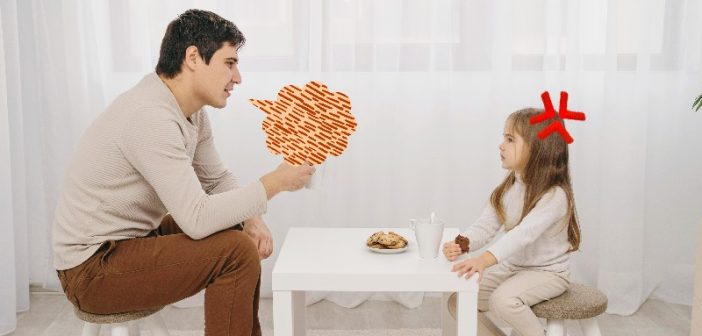
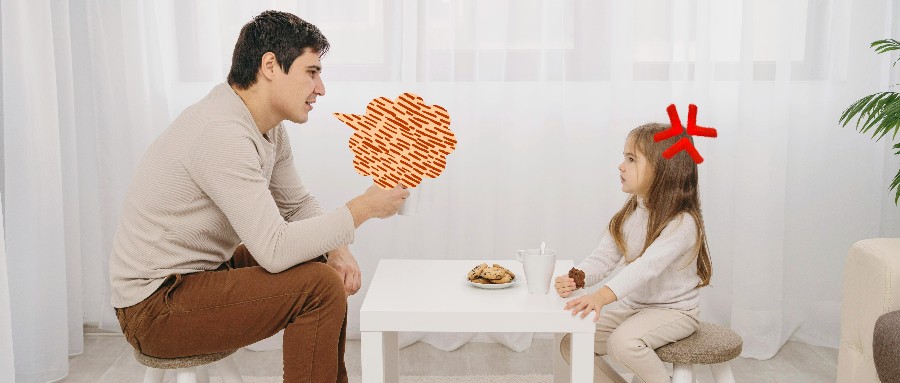
 It’s a scenario many parents recognize: A well-meaning neighbor, family friend or local adult spots your child and teases, “Hey, did you break my favorite mug? I saw you near it earlier!” For little kids, unaccustomed to such playful jabs, the moment can be disorienting. Their eyes widen, they freeze or they rush to deny it – unsure if the adult is joking or serious.
 My daughter’s first brush with this left her tongue-tied and running to hide behind me. My husband’s colleague, grinning, accused her of “breaking” his claw machine that wasn’t plugged in to begin with because he saw her playing with the buttons. She stood there, red-faced, struggling to find words. Later, she asked, “Why did he say that? I didn’t do it!” It was a teachable moment: How do we help kids navigate these interactions without feeling small or scared?
I realized the answer wasn’t just to tell her, “They’re joking.” That might dismiss her feelings of confusion or unfairness. Instead, I wanted to give her a tool – something concrete she could say to regain control. So, I taught her: “If someone says you did something you didn’t, ask them to prove it.”
It’s a simple phrase, but powerful. “Prove it” shifts the dynamic. It turns the tables gently, without aggression, by placing the burden of evidence back on the accuser. For a child, it’s empowering: instead of feeling defensive, they’re asking for facts. And it works whether the accusation is a joke or a serious one.

Playful teasing, of course, often comes from a place of affection. Adults may see it as a way to connect, testing a child’s reaction with lighthearted banter. But kids, especially little ones, don’t always grasp the tone. To them, an accusation – even a silly one – feels like a challenge to their honesty. Teaching them to respond with “Prove it” isn’t about being rude; it’s about teaching them to advocate for themselves.
Since that conversation and many practices at home, my daughter has used the phrase a few times. The same guy did it again a few days later. “I can’t find my phone. You took it didn’t you?” he teased her at dinner one night. Instead of turned red faced like the first time he joked, she replied with a big, strong “Prove it!” and I could see the surprise on his face. He gave her a thumbs up, and that was it.
Parenting is full of small lessons that build big skills. This one – teaching a child to ask for proof when accused – does more than defuse teasing. It plants seeds of critical thinking: Don’t accept blame without evidence. It fosters self-respect: My word matters, and so do the facts. And it reminds kids that even when adults are playful, their feelings of fairness and safety deserve to be taken seriously.
Images: Freepik