

For many families, school brings both excitement and challenges. One of the most common learning differences children may face is dyslexia, a condition that affects how the brain processes language. Understanding dyslexia is vital not only for educators but also for parents and caregivers who want to support their children’s growth. While dyslexia does not reflect a child’s intelligence or potential, it does change the way learning unfolds. By recognizing its different forms and impacts, families can help their children thrive academically and emotionally.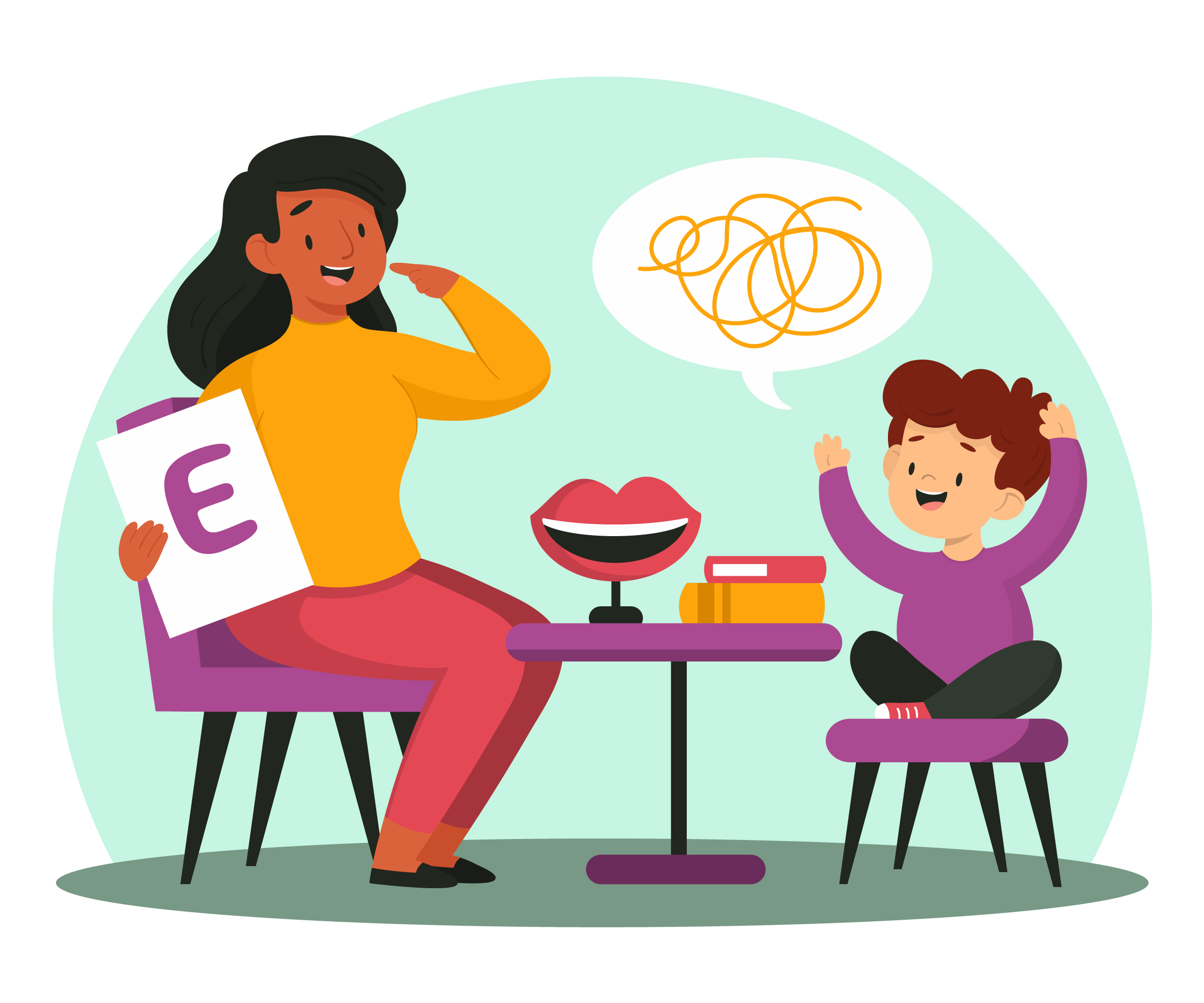 What Is Dyslexia?
Dyslexia is a neurodevelopmental condition that primarily affects reading and language processing skills. It is not caused by poor teaching, lack of motivation or low intelligence. Instead, dyslexia is linked to differences in the way the brain processes written and spoken language (California Learning Resource Network [CLRN], 2025). These differences make decoding words, spelling and fluent reading more difficult, which in turn can affect overall learning.
Researchers have identified several types of dyslexia. Phonological or dysphonetic dyslexia, for example, involves difficulties breaking words into their component sounds, while surface or dyseidetic dyslexia involves challenges recognizing whole words by sight (Dorwart, 2022). There is also rapid naming deficit dyslexia, where children struggle to name familiar objects, colors or letters quickly. Each type brings unique challenges, which is why a “one-size-fits-all” approach to reading instruction rarely works.
How Dyslexia Affects Learning
Children with dyslexia often find learning to read and write frustrating. Because reading is such a cornerstone skill, struggles in this area can ripple into other subjects like math, science and history, which often require heavy amounts of reading (CLRN, 2025). Beyond academics, difficulties with literacy can affect self-esteem and confidence, making children hesitant to participate in class or engage with peers.
However, dyslexia does not mean a child cannot learn effectively. Instead, it means they may require different teaching strategies. Evidence-based reading interventions, structured literacy programs, and supportive classroom environments can make an enormous difference. Early detection is key: The sooner dyslexia is identified, the earlier a child can receive the help they need.
Screening for Dyslexia: The Role of DIBELS
One of the tools schools frequently use to screen for reading difficulties is the Dynamic Indicators of Basic Early Literacy Skills (DIBELS). DIBELS is a set of short, research-based assessments that measure foundational literacy skills such as phonemic awareness, letter naming and oral reading fluency. By administering DIBELS several times throughout the year, educators can monitor student progress and identify children who may be at risk for dyslexia.
While DIBELS does not diagnose dyslexia, it serves as a valuable early-warning system. When combined with further evaluations and professional assessments, it helps schools determine which students need targeted reading interventions. For families, knowing that their child’s progress is closely tracked can be reassuring and can lead to earlier support if challenges arise.
Dyslexia Across Languages
Interestingly, dyslexia does not look the same across all languages. A child learning to read in English, for example, may face different hurdles than a child learning to read in Spanish, Chinese or Hebrew. This is because languages differ in how letters or characters map to sounds and in the complexity of their writing systems.
Research by Rueckl et al. (2015) postulated that proficient reading activates similar brain regions across different languages, but that each language activates additional systems. For English, that area is located in the left frontal gyrus, whereas reading and writing in Chinese activate more of the back of the brain, the area closely associated with visual memory. Various forms of dyslexia can manifest depending on the first language of literacy. Children learning logographic writing systems such as Chinese may struggle with visual recognition of characters if they have dyseidetic (visual) dyslexia, whereas a student with dysphonetic dyslexia may not experience issues until they are learning to read and write in a phonics-based system like English.
This insight highlights the importance of considering cultural and linguistic context when supporting children with dyslexia. Families raising bilingual or multilingual children should be aware that their child’s learning profile might look different depending on the language environment and language of instruction.
Supporting Children With Dyslexia
For parents, the journey often begins with noticing small signs: a child taking longer to learn the alphabet in English, confusing letters or struggling to remember sight words. If concerns arise, families should seek guidance from educational psychologists or pediatricians who can recommend assessments.
Support strategies include:
- Structured literacy instruction: Explicit, systematic teaching of phonics and word recognition for alphabetic languages.
- Technology tools: Audiobooks, text-to-speech software, and speech-to-text programs can help children access content while building literacy skills.
- Positive reinforcement: Focusing on strengths, such as creativity, problem-solving or verbal reasoning, can boost confidence.
- Family advocacy: Parents play a crucial role in ensuring schools provide appropriate accommodations and interventions.
Importantly, dyslexia is not something children “outgrow.” Instead, they learn to manage it with the right strategies and support. Many individuals with dyslexia go on to excel in higher education and in careers where creative thinking and problem-solving are valued.
A Path Forward
Understanding dyslexia means recognizing it not as a barrier, but as a different pathway to learning. With tools like DIBELS and the Dyslexia Screener for Chinese, adopted in November 2024 for use on the Chinese mainland, early screening, culturally informed approaches to literacy, and family-centered support, children with dyslexia can thrive. For families, the key lies in partnership – with educators, with specialists and most importantly, with their children – walking together on the pathway of literacy.
What Parents Should Know About Dyslexia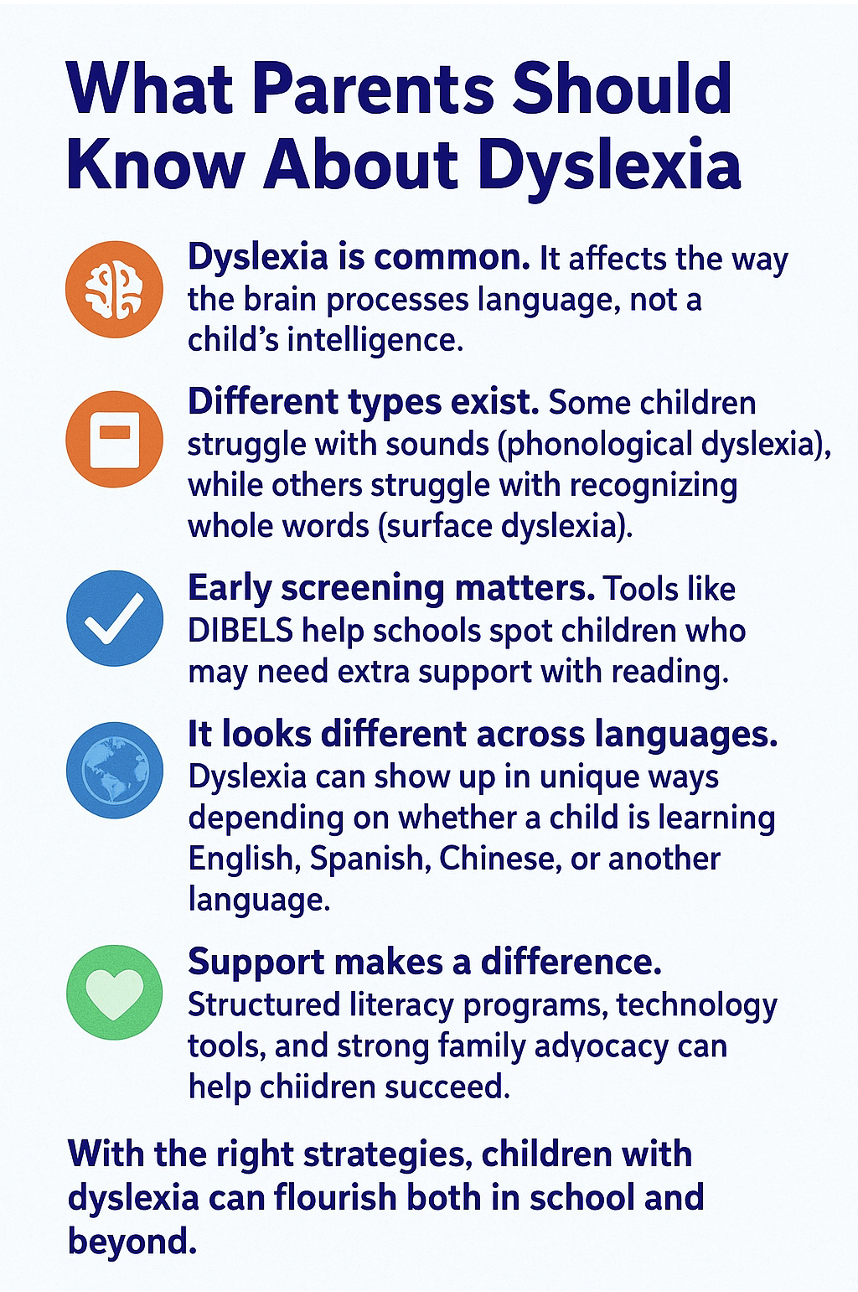
- Dyslexia is common. It affects the way the brain processes language, not a child’s intelligence.
- Different types exist. Some children struggle with sounds (phonological dyslexia), while others struggle with recognizing whole words (surface dyslexia).
- Early screening matters. Tools like DIBELS help schools spot children who may need extra support with reading.
- It looks different across languages. Dyslexia can show up in unique ways depending on whether a child is learning English, Spanish, Chinese or another language.
- Support makes a difference. Structured literacy programs, technology tools and strong family advocacy can help children succeed.
- Confidence counts. Encouraging your child’s strengths – creativity, problem-solving, big-picture thinking – builds resilience.
With the right strategies, children with dyslexia can flourish both in school and beyond.
What Kids With Dyslexia Should Know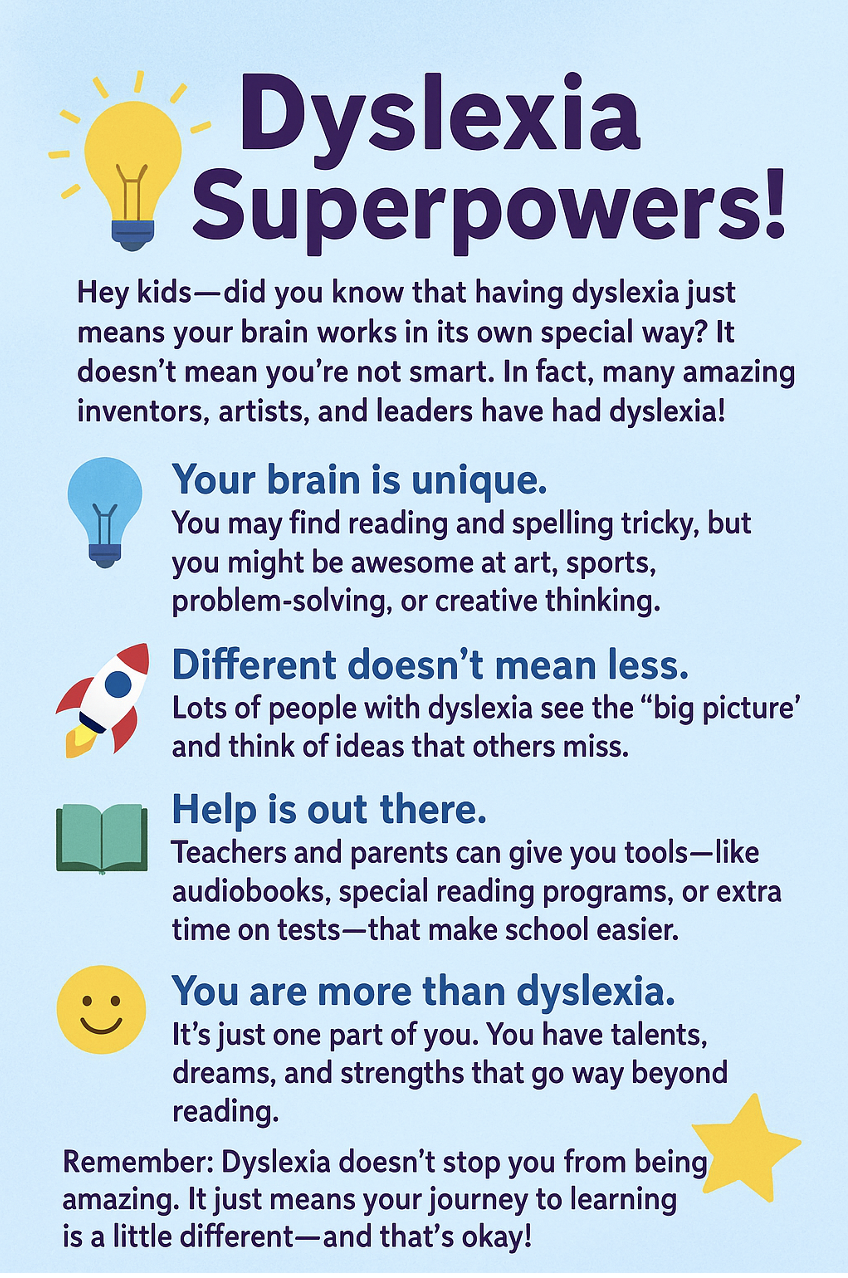
🌟 Dyslexia Superpowers!
Did you know that having dyslexia just means your brain works in its own special way? It doesn’t mean you’re not smart. In fact, many amazing inventors, artists, and leaders have had dyslexia!
Here are some good things to remember:
💡 Your brain is unique. You may find reading and spelling tricky, but you might be awesome at art, sports, problem-solving or creative thinking.
🚀 Different doesn’t mean less. Lots of people with dyslexia see the “big picture” and think of ideas that others miss.
📚 Help is out there. Teachers and parents can give you tools – like audiobooks, special reading programs or extra time on tests – that make school easier.
🎉 You are more than dyslexia. It’s just one part of you. You have talents, dreams and strengths that go way beyond reading.
👉 Remember: Dyslexia doesn’t stop you from being amazing. It just means your journey to learning is a little different – and that’s okay!
References
California Learning Resource Network. (2025, January 11). How does dyslexia affect learning? California Learning Resource Network. https://www.clrn.org/how-does-dyslexia-affect-learning/
Dorwart, L. (2022, March 12). The types of dyslexia. Verywell Health. https://www.verywellhealth.com/types-of-dyslexia-5214423
Rueckl, J. G., Paz-Alonso, P. M., Molfese, P. J., Kuo, W.-J., Bick, A., Frost, S. J., Hancock, R., Wu, D. H., Mencl, W. E., Duñabeitia, J. A., Lee, J.-R., Oliver, M., Zevin, J. D., Hoeft, F., Carreiras, M., Tzeng, O. J. L., Pugh, K. R., & Frost, R. (2015). Universal brain signature of proficient reading: Evidence from four contrasting languages. Proceedings of the National Academy of Sciences, 112(50), 15510–15515. https://doi.org/10.1073/pnas.1509321112
Images: Freepik