

Before the session starts, we sit in a semicircle of sorts and listen to Ashish Bahuguna, his gentle voice and calm demeanor drawing us in. At the risk of speaking in stereotypes, Ashish is exactly what you would expect a yoga teacher to be: handsome with a patient smile, incredibly flexible and with an airy light quality, seeming to float into the studio before taking his place among us eager students. There are a few new students in the class, me included, and for that reason he traces back the roots of what is now famous around the world as “Yoga Nidra.” Swami Satyananda, Ashish explains, discovered the joys of this type of yoga practice as a young Swami while living with his Guru, Venerable Swami Sivananda, at his ashram in Rishikesh.

Yoga master Ashish Bahuguna
The tale goes that the young Swami would fall asleep while working as a guard to students at a nearby ashram learning the Vedic lifestyle, which would include chanting every morning. The young Swami would fall asleep as the students were chanting in the wee hours of the morning, and much to his surprise, weeks later, while the students were chanting their mantras, he realized the chants were familiar to him. It became apparent to him that despite his seeming physical state of sleep and relaxation, his mind continued to connect to the surroundings, adding, “I always knew that knowledge was gained through the five senses and the intellect. But here I was finding that knowledge could also be transmitted directly!” The Guru then went on to inculcate this knowledge into his life, using this form of mindful sleep to even learn several languages to the point of near fluency in a matter of weeks!
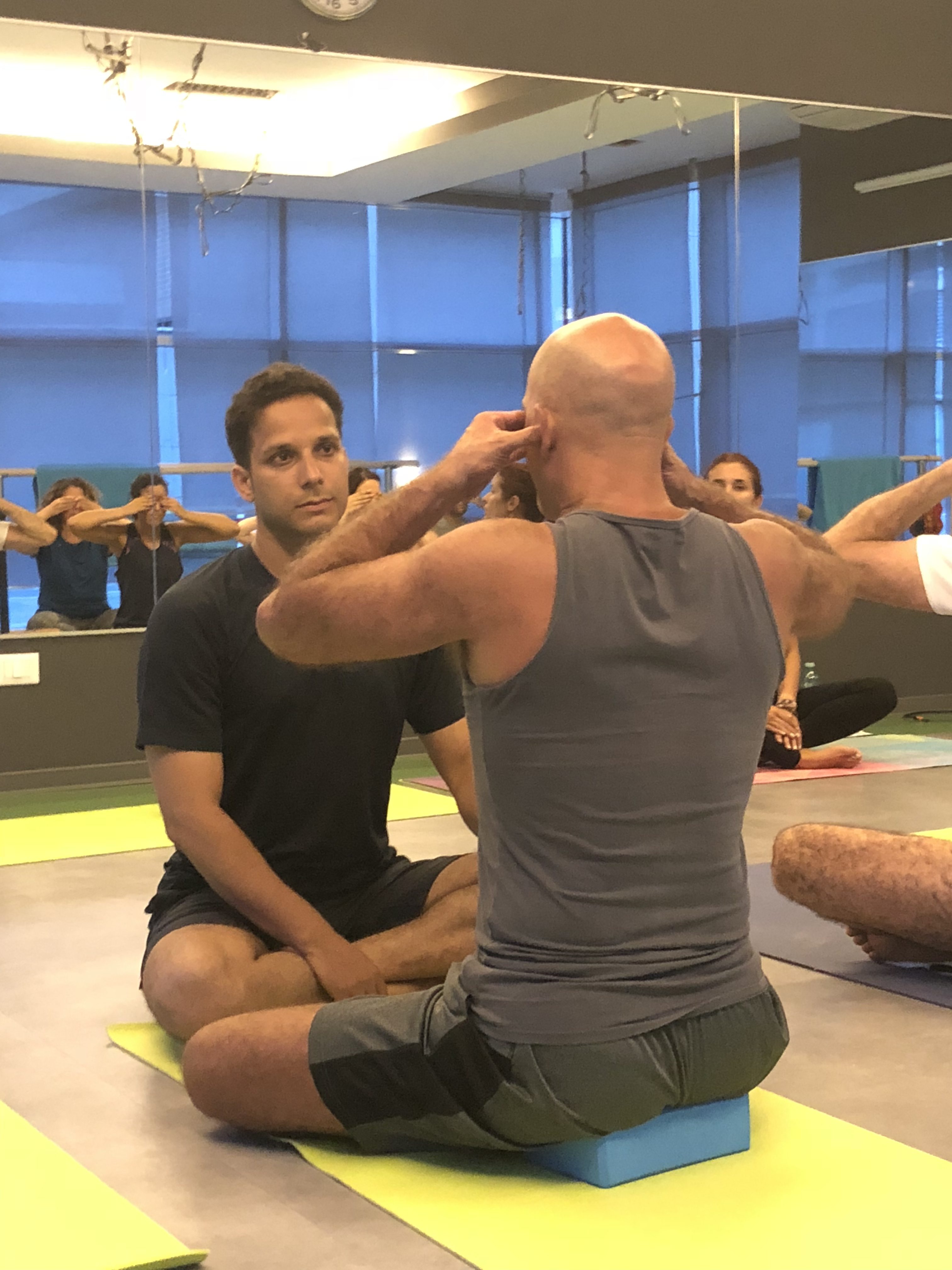
Thus the idea of Yoga Nidra was born, the practice of mindful sleep or deep realization. By coincidence, our guru for the night, a graduate from Rajasthan University with a master’s degree in Yoga, is also from the same region as the famed Guru. Bahuguna leads us through a short and active practice, moving from child’s pose to downward dog, then through a few other sequences. The purpose of the active practice, we are made to understand, is to allow for our bodies to be tired so as to achieve an even deeper sleep or rest when we begin the meditative portion of the practice.
“People often confuse it as a hypnosis, but it’s a state of sense withdrawal and a step towards awareness. Ignorance also leads to abstract ideas like ‘it’s a state of deep sleep’, but it’s about deep realization. Lucid Dreaming is often associated with Yoga Nidra, but it’s about self-introspection,” elaborates Bahuguna. Soon, the entire room, novice and pro alike, are panting and begging for the sweet release of meditation. I can’t help but envy Bahuguna’s flexibility. But that is to be expected, given his practicing yoga since the age of 12 and officially instructing in the practice for 15 years.
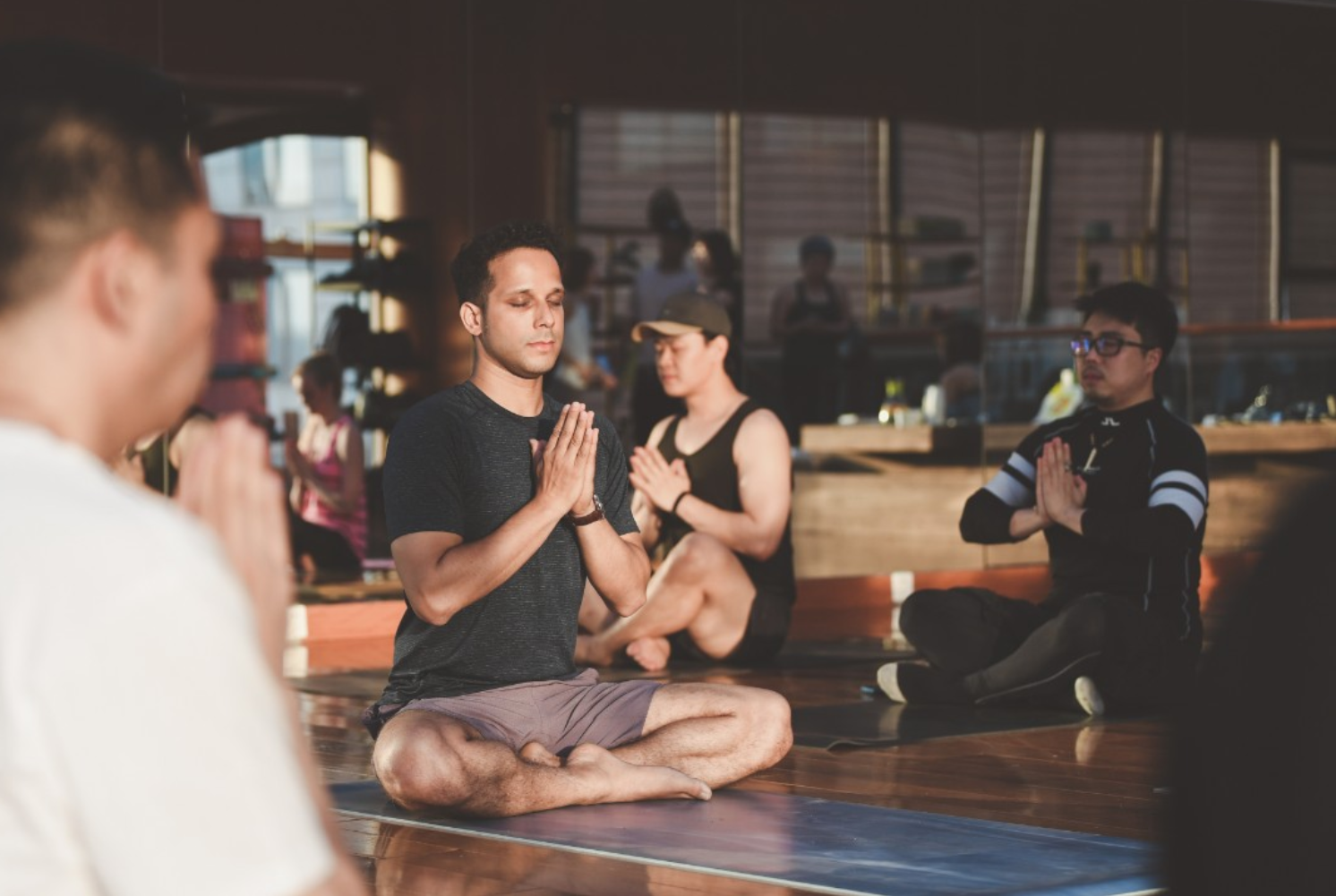
Soon, the lights are turned off as the heat in the studio is kicked up a notch. Each of us lays flat on our backs, legs supported at the knees by a comfy bolster, and a warm blanket covering everything other than our heads. It is important, Bahuguna emphasizes, to be extremely comfortable, even offering yoga belts to place over the eyes for those who might need a blindfold. Then we begin, his calming voice guiding our breathing, our visualization, taking us deeper still, yet reminding us to remain conscious and not to fall asleep.
A few are left by the wayside, obviously. Beijing takes an exacting toll on its residents, leaving us all exhausted at the end of the day. But the benefits include reduced stress, easing the effects of hypertension, hyperthyroidism, and even mild cases of insomnia. As we lie still, my mind goes this way and that, but I am constantly brought back to my breath. There is a feeling of time stopping yet moving at a remarkable speed. We are gently drawn back into the land of the conscious, and instantly I am refreshed. There is an immense feeling of pride at having been able to carve out this much time from my seemingly always hectic schedule, which I would suppose is part of the dose of joy Bahuguna tells us to expect after a successful practice.
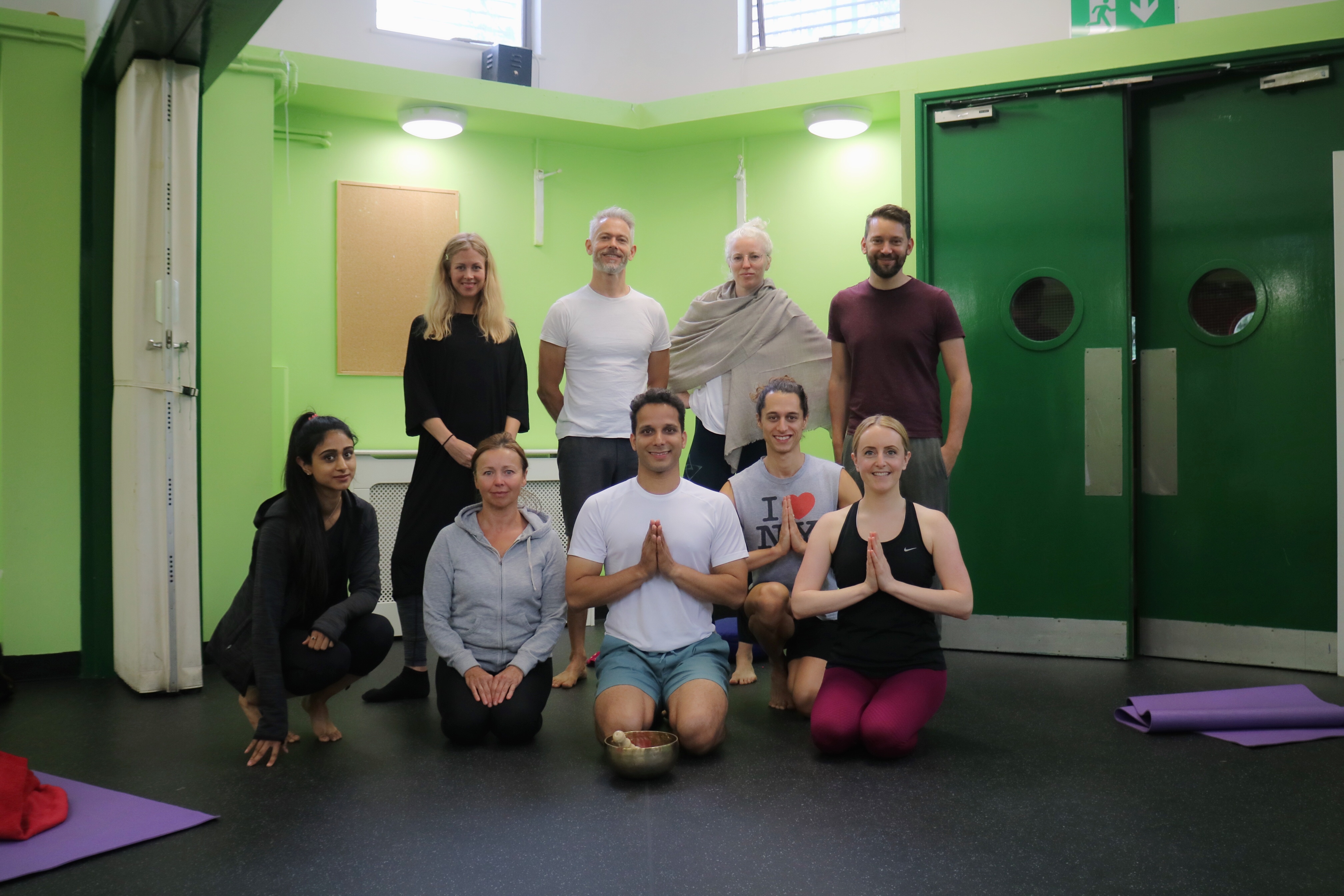
“The practice of Yoga Nidra has some pretty powerful psychological benefits as well. It can assist in healing psychological wounds and assists those dealing with depression and dependency,” says Bahuguna, adding “Come to Yoga Nidra with a desire to connect with yourself. Yoga and Yoga Nidra is for everyone. Anyone can do it, all you need is to just to come with a learning heart.” The practice truly does leave me rejuvenated, staving off the winter blues and a gnawing feeling that a sunny beach somewhere far away is calling out to me. Bahuguna’s Weyoga studio is an oasis for a rushed city mind and body, and experience truly worth having, if not trying.
Photos: courtesy of Ashish Bahuguna